As Mexico City (CDMX) undergoes a transformative architectural evolution—combining modern vertical high-rises in Santa Fe and Reforma with luxurious residential developments in Polanco, Condesa, and Pedregal—the demand for high-performance architectural envelope systems has surged. China’s premier aluminium door manufacturing sector stands at the forefront of providing custom, heavy-duty sliding doors and architectural glazing engineered specifically for Mexico City's unique topography, seismic codes, atmospheric pressure variations, and climate dynamics.
This technical white-paper guide outlines how our advanced manufacturing facility bridges heavy-duty extrusion capabilities (6063-T5/T6 structural alloys), polyamide thermal break technology (PA66-GF25), acoustic damping double-glazing, and strict international compliance standards (AAMA, NFRC, AS2047, and Mexican NOM standards) to deliver direct-from-factory aluminium door systems to real estate developers, commercial contractors, and architectural firms across CDMX and broader Mexico.
Precision-manufactured sliding, bi-fold, and structural glass solutions tailored for residential villas, luxury apartments, and commercial projects in Mexico City.
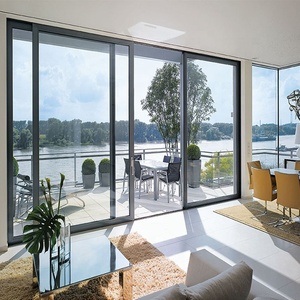
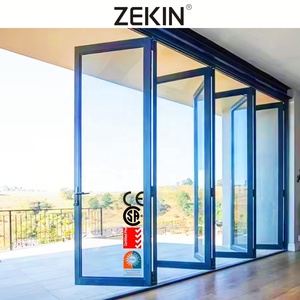
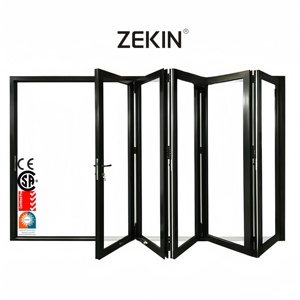
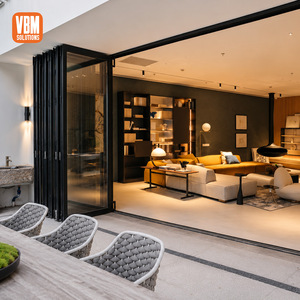
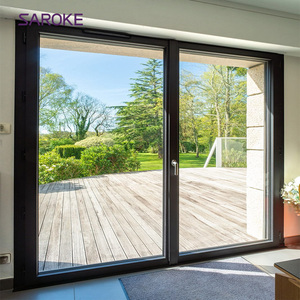
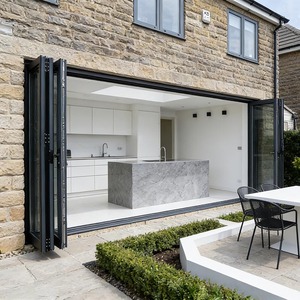
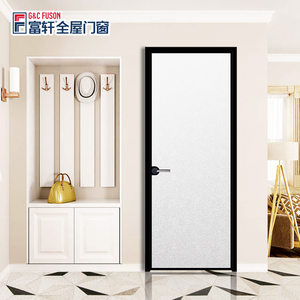
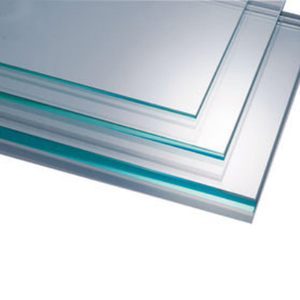
Combining over 12 years of structural fabrication experience, state-of-the-art CNC machining, and automated glazing assembly to deliver defect-free architectural facade systems.
We utilize strictly primary-grade billet aluminum (never scrap remelt) with wall thicknesses ranging from 2.0mm to 3.5mm. This guarantees optimal yield strength, superior structural rigidity under heavy wind loads, and flawless surface preparation for anodizing or fluorocarbon powder coating.
Our thermal break profile series incorporates 25% glass-fiber reinforced polyamide strips inserted via multi-stage rolling processes. This engineered barrier eliminates thermal bridging, lowering indoor HVAC energy consumption by up to 35% in temperature-variable climates like Mexico City.
Every profile cutting, corner cleat crimping, hinge milling, and lock slotting operation is executed on high-precision European CNC machinery. Tighter tolerances (<0.5mm) ensure air-tight interlock seals and effortless sliding action across multi-track systems.
Exporting high-end architectural sliding doors to Mexico City requires a deep engineering understanding of the valley's distinct geography, microclimates, and municipal construction codes (*Reglamento de Construcciones para el Distrito Federal - RCDF*). Our custom door systems are configured to solve key regional challenges across specific CDMX districts:
Mexico City sits over a former lakebed, creating soft-soil conditions in Zone III that amplify seismic activity during earthquakes. Standard rigid door frames can buckle or shatter glass panes when structural drift occurs. Our aluminium sliding door systems feature frame-to-wall expansion joints, heavy-duty structural silicones (Dow Corning 983), and flexible EPDM gaskets engineered to absorb lateral floor displacements up to 2.5% drift without losing structural integrity or glass retention.
Nochebuena, Roma, and Condesa are famous for vibrant street life, but commercial traffic and bustling nightlife present major noise pollution challenges for luxury residential developments. By combining multi-chambered thermal break aluminium frames with argon-filled laminated double glass (6mm Toughened + 1.14 PVB + 6mm Low-E), our sliding doors deliver sound reduction metrics up to **STC 42 dB**, turning high-density urban residences into quiet, peaceful interiors.
At 2,240 meters above sea level, atmospheric pressure is substantially lower than sea-level manufacturing plants. Standard sealed insulated glass units (IGUs) shipped to CDMX can suffer from glass deflection (pumping effect), leading to seal failure or distortion. Our factory installs specialized capillary breather tubes or balances internal gas charges during IGU assembly for CDMX destinations, preventing seal rupture and maintaining thermal efficiency throughout the system's lifetime.
Between May and October, Mexico City experiences sudden, violent downpours (*chubascos*). Standard flat door thresholds frequently overflow into living spaces. Our patio sliding doors designed for Mexico City feature **high-sub-sill drainage channels with stainless steel check-valves**. This allows heavy runoff to discharge rapidly outward while blocking wind-driven rain from penetrating the interior threshold under design wind pressures exceeding 1500 Pa (DP50 rating).
As developer requirements in Mexico City evolve toward modern aesthetic standards and sustainable building practices (such as LEED Mexico certification), sliding door specification trends have shifted dramatically:
Architects in Santa Fe and Interlomas favor floor-to-ceiling glass assemblies with concealed outer frames. Our ultra-slim sliding door series offers interlocking vertical stiles as narrow as 20mm, maximizing natural daylight while supporting glass panel weights up to 400 kg via precision German roller hardware.
CDMX's mild year-round climate ("eternal spring") encourages indoor-outdoor living. Pocket sliding doors that recede completely into dry-wall cavities, as well as corner 90-degree opening systems without vertical mullions, have become the premier choice for luxury villas in San Ángel and Pedregal.
Luxury high-rises increasingly require smart home integration. We supply motorized sliding door options compatible with Tuya, Control4, and Somfy automation systems, featuring hidden magnetic drive motors, pinch-protection sensors, and remote app operation.
High UV exposure at CDMX altitude can cause inferior paint coatings to chalk or fade within years. We utilize AkzoNobel and PPG fluorocarbon (PVDF) powder coatings that comply with AAMA 2605 standards, backed by a 15 to 20-year color fastness warranty against solar degradation.
The table below provides a detailed structural breakdown comparing standard residential systems against our commercial-grade heavy-duty thermal break systems designed for Mexico City projects:
| Specification Parameter | Standard Residential Series | Heavy-Duty CDMX Thermal Break Series |
|---|---|---|
| Alloy & Temper | 6063-T5 Aluminum (1.4mm - 1.6mm) | 6063-T6 Structural Grade (2.0mm - 3.0mm) |
| Thermal Barrier | Non-Thermal Break / PVC Strip | Imported Polyamide PA66-GF25 (24mm - 34mm) |
| Glass Configuration | 5mm + 9A + 5mm Monolithic Tempered | 6mm Low-E + 12A/Ar + 6mm Laminated SGCC |
| Acoustic Rating (STC) | 28 - 32 dB | 38 - 43 dB (High Noise Reduction) |
| Wind Pressure (DP Rating) | DP 30 (1440 Pa) | DP 60 - DP 75 (2880 Pa - 3600 Pa) |
| Hardware System | Standard Domestic Latch | CMECH / Siegenia / Hoppe Multi-Point Lock |
| Surface Coating | Standard Powder Coating | AkzoNobel PVDF / Fluorocarbon (AAMA 2605) |
Clear answers covering logistics, tariffs, NOM compliance, custom shop drawings, and installation support for Mexican procurement managers.
We ship via full container loads (FCL) or less-than-container loads (LCL) directly from major Chinese ports (Ningbo/Shanghai/Shenzhen) to primary Mexican Pacific ports such as **Manzanillo** or **Lázaro Cárdenas**. From port entry, inland bonded trucking routes deliver directly to your job site or warehouse in Mexico City. Our logistics team provides all necessary shipping documents including Commercial Invoice, Packing List, Bill of Lading, and Certificate of Origin (Form A) to ensure smooth clearance through Mexican Customs (*Aduanas*).
Yes. All safety tempered glass used in our window and door assemblies complies with **NOM-146-SCFI-2001** (Safety Glass for Architectural Use) as well as international benchmarks such as ANSI Z97.1 and EN12150. Extruded aluminum frames meet strict structural load requirements compatible with Mexico City's *Reglamento de Construcciones* (RCDF).
All custom sliding door components undergo rigorous multi-layer exporting packaging. Glass units and assembled frames are wrapped in protective PE anti-scratch film, edge-protected with high-density foam buffers, and sealed inside fully enclosed **fumigated ISPM-15 plywood crates**. Metal corner brackets prevent panel shifting inside shipping containers.
Standard production timelines range from **20 to 25 days** following CAD shop drawing approval and deposit receipt. Ocean transit from China to Manzanillo Port takes approximately **18 to 22 days**, followed by 3 to 5 days for customs clearance and overland transport to Mexico City. The total door-to-door timeline averages **45 to 55 days**.
Absolutely. Our dedicated architectural design team prepares complete 2D and 3D CAD shop drawings detailing profile cross-sections, opening dimensions, anchor point schedules, sill drainage details, and glass specifications for every project. Manufacturing begins only after client and consultant sign-off.
Yes. All systems are pre-assembled and pre-drilled at our factory prior to packing to verify hardware alignment. Components are clearly labeled with matching identification tags corresponding to provided installation manuals, video tutorials, and step-by-step exploded assembly diagrams. Remote engineering support is available via live video call during site installation.
Whether you are developing a luxury residential tower in Polanco, a boutique commercial complex in Roma Norte, or a private villa in Santa Fe, our technical team is ready to provide BOQ estimation, profile samples, and CAD engineering support.