Direct factory supply and engineering export solutions compliant with ASTM C1172, EN 14449, and Civil Defense safety protocols across Dubai, Abu Dhabi, Sharjah, and the GCC.
Architectural glazing in the United Arab Emirates (UAE) faces environmental stresses matched by few other regions worldwide. High ambient summer temperatures exceeding 50°C, direct solar radiation exceeding 1,000 W/m², severe sandstorm abrasion, and intense coastal humidity in cities like Dubai, Abu Dhabi, and Sharjah demand strict physical and thermal glazing specifications. Standard monolithic or basic annealed laminated glass quickly fails under thermal shock, delamination stress, or structural deflection.
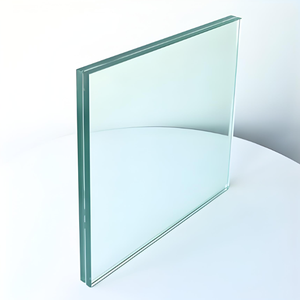
As premier laminated glass suppliers and exporters for the United Arab Emirates, Skyline Aluminium & Glass manufactures and exports high-performance structural safety glass engineered specifically to eliminate thermal breakage, optimize solar heat gain coefficients (SHGC), and deliver certified structural integrity under immense wind-load forces.
Direct exposure to infrared (IR) and ultraviolet (UV) spectra causes rapid heat accumulation inside structural glass assemblies. Unprocessed laminated glass experiences severe thermal gradient stress when central pane temperatures surpass edge temperature limits, triggering structural fractures. To solve this, our export-grade laminated glass undergoes state-of-the-art horizontal tempering and heat-soak testing (HST) in accordance with EN 14179, eliminating spontaneous breakage risk caused by Nickel Sulfide (NiS) inclusions.
When selecting laminated glass for curtain walls, overhead entrance canopies, skylights, or structural balustrades in the Middle East, structural engineers must weigh interlayer shear performance against ambient temperature spikes:
| Performance Metric | Standard PVB (Polyvinyl Butyral) | SGP (SentryGlas Ionoplast) | EVA (Ethylene Vinyl Acetate) |
|---|---|---|---|
| Shear Modulus (at 50°C) | Low (< 1 MPa) — Softens in heat | High (> 100 MPa) — Retains rigidity | Medium (~2 to 4 MPa) |
| Post-Breakage Structural Integrity | Fails / Tends to sag under weight | Stays upright; holds structural load | Moderate resistance |
| Edge Delamination & Humidity Resistance | Moderate (Susceptible to open moisture) | Exceptional (Zero open-edge clouding) | High (Closed cell matrix) |
| Yellowness Index (YI) After UV Exposure | Gradual yellowing over 5–8 years | Constant clarity (< 1.5 YI) | Low yellowing risk |
| Primary UAE Application Scope | Internal partitions, low-rise windows | High-rise curtain walls, canopies, roofs | Decorative & solar panel laminates |
Custom-engineered glazing configurations tailored to the precise structural, thermal, and aesthetic demands of Gulf real estate developments.
Tower structures along Sheikh Zayed Road or Al Maryah Island require laminated insulated glass units (IGUs) capable of resisting positive and negative wind pressure loads up to 4.5 kPa. Combining Low-E double silver coatings on Surface #2 with an SGP-laminated inner pane guarantees maximum solar radiation reflection, ultra-low Solar Heat Gain Coefficients (SHGC < 0.23), and full shatterproof security in compliance with UAE Civil Defense Life Safety Code requirements.
Modern luxury villas require light-filled residential atrium roofs that eliminate radiative heat transfer. Our prefabricated laminated glass roof systems utilize heat-strengthened low-iron (extra-clear) laminated glass with argon-filled insulating cavities. This ensures absolute safety from falling debris, blocks 99.5% of interior-fading UV light, and reduces air conditioning electrical loads by up to 34% during summer peaks.
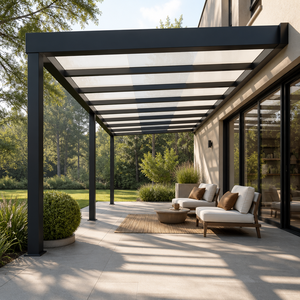
Grand entrance portals at hospitality and retail hubs—such as Downtown Dubai or Ras Al Khaimah beachfront resorts—demand point-supported cantilever glass canopies. Utilizing heavy-duty spider fittings and SGP structural laminates, these glass awnings support self-weight, maintenance live loads, and sudden sandstorm gust impacts without risk of structural failure or moisture delamination along exposed glass edges.
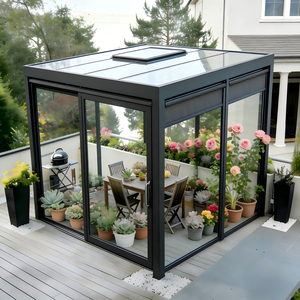
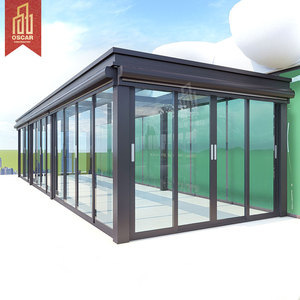
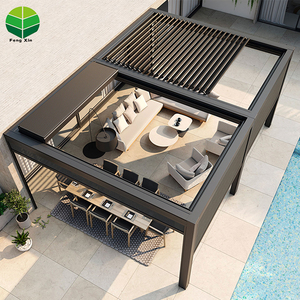
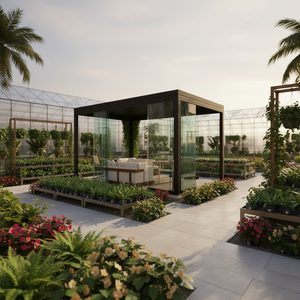
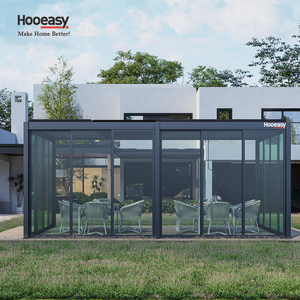
Residential outdoor spaces in the UAE require dynamic outdoor living systems. Combining motorized powder-coated aluminum louver roofs with toughened laminated glass sliding partition walls allows homeowners to enjoy climate-controlled sunrooms in summer and open-air patios in winter. Our perimeter glass walls use weather-sealed pile gaskets that resist fine desert dust ingress.
The construction sector across the United Arab Emirates is undergoing a major paradigm shift toward sustainable, carbon-neutral, and energy-efficient building envelopes. Government initiatives such as the Dubai Green Building Regulations (Al Sa'fat) and the Abu Dhabi ESTIDAMA Pearl Rating System mandate strict performance criteria for transparent facade surfaces:
To achieve Net-Zero energy targets, leading developers are replacing standard double-glazing with triple-glazed units containing soft-coat Low-E layers and acoustic laminated glass. These systems achieve U-values under 0.9 W/m²K, drastically reducing indoor thermal loads even when outside shade temperatures reach 52°C.
Urban residential developments adjacent to Dubai International Airport (DXB), Al Maktoum Airport (DWC), or major transit highways require Sound Transmission Class (STC) ratings above 42 dB. Laminated glass engineered with specialized acoustic PVB interlayers dampens low-frequency engine and traffic noise, delivering acoustic serenity inside high-end apartments.
Embassies, government headquarters, and financial institutions across Abu Dhabi and Dubai specify blast-resistant laminated glass tested to ISO 16933 and ASTM F1642. By combining multiple layers of high-tensile polycarbonates and SGP interlayers, glass facades absorb high-impulse shockwaves without producing lethal internal glass splinters.
High-end retail outlets and luxury car showrooms demand maximum visual transmittance without the greenish tint typical of standard float glass. Low-iron laminated safety glass offers a light transmittance (VLT) exceeding 89%, preserving truer color rendering for interior displays while retaining full shatterproof compliance.
Technical, logistical, and compliance insights compiled by our structural engineering export team.
SGP (SentryGlas) is 100 times stiffer and 5 times tougher than standard PVB. In the hot GCC climate, standard PVB softs when glass surface temperatures exceed 40°C, causing laminated panes to flex or delaminate along un-framed edges. SGP maintains its structural modulus even at 50°C, ensuring overhead canopies, glass balustrades, and structural fins remain rigid and safe after accidental glass breakage.
When part of a glass facade receives direct solar radiation while the frame remains shaded, significant temperature differentials develop across the pane. Laminated glass constructed from heat-strengthened or fully tempered glass safely absorbs temperature variations exceeding 150°C across its surface without risking thermal stress fractures.
UAE Civil Defense mandates toughened or laminated safety glass in all critical impact zones, including doors, side-lights, low-level glazing below 800mm from floor level, overhead skylights, and balustrades. Skylights and overhead canopy glazing must use laminated glass on the bottom pane so that if upper layers fracture, shattered fragments remain adhered to the interlayer.
Standard custom-cut laminated glass orders are manufactured within 10 to 15 working days following shop-drawing sign-off. Bulk structural glass shipments and pre-assembled aluminum pergolas or glass sunroom kits exported to Jebel Ali Port (Dubai) or Mina Zayed (Abu Dhabi) typically take 20 to 25 calendar days, supported by expedited customs documentation.
Yes. The most energy-efficient setup for Gulf buildings is a double-glazed IGU featuring a toughened Low-E outer pane (6mm or 8mm), an argon gas cavity (12mm or 16mm warm-edge spacer), and a laminated inner safety pane (5mm + 1.52mm PVB/SGP + 5mm). This configuration offers superb thermal insulation, acoustic isolation, and impact protection.
We apply edge-sealing techniques during high-pressure autoclave processing and specify non-solvent structural silicones (such as Dow Corning 995) during structural glazing assembly. For open-edge balustrades exposed to sea air, specifying SGP or hydrophobic EVA interlayers eliminates moisture ingress and clouding along exposed edges.
Yes. Every laminated glass export package delivered by Skyline Aluminium includes factory test certificates confirming compliance with ASTM C1172 (Laminated Architectural Glass), EN 12600 (Impact Resistance), and structural wind-load calculation reports stamped by certified facade engineers.
Simply click the "Get Catalog" call-to-action button anywhere on this page to launch our live engineering support window. Submit your project elevation drawings, bill of quantities (BOQ), or opening schedules, and our project managers will issue a technical submittal package within 24 hours.
Skyline Aluminium operates state-of-the-art fabrication facilities spanning Industrial Area in Al Sajaa, Sharjah, delivering direct factory supply, precision engineering, and specialized export logistics across all 7 emirates and the wider GCC region. Over 12+ years and 1,000+ completed projects, our structural glass and aluminum systems have earned a reputation for uncompromised quality and reliability.
We retain 100% control over cutting, edge polishing, waterjet drilling, tempering, and cleanroom autoclave lamination. Maintaining strict cleanroom standards prevents dust inclusion and guarantees crystal-clear optical quality across all exported glass panels.
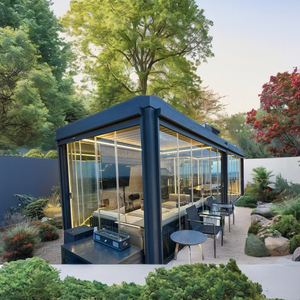
Beyond raw laminated glass supply, we design and manufacture precision-engineered aluminum framework systems. From architectural curtain walls to retractable bioclimatic pergolas and solarium glass houses, all profile systems feature high-grade polyamide thermal breaks engineered to endure extreme heat.
We support main contractors, consultants, and developers with complete CAD/BIM shop drawings, structural calculation reports, sample mock-ups, and material submittals aligned with municipality and Civil Defense requirements across Dubai, Abu Dhabi, and Sharjah.