Discover our high-performance thermal break sliding systems, bi-fold patio walls, casement doors, and structural safety glass modules custom-manufactured for seamless OEM modular housing integration in Hungary.
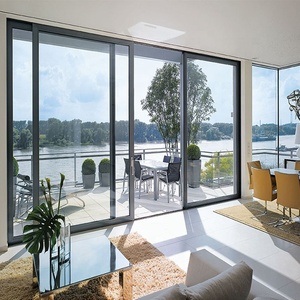
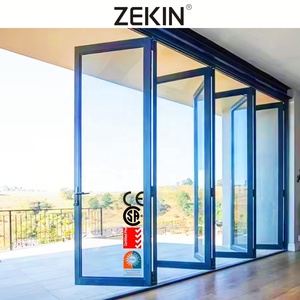
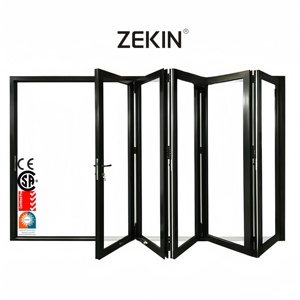
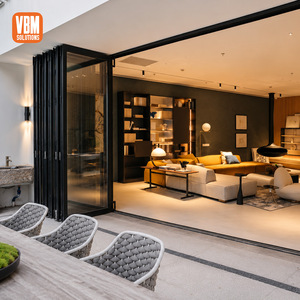
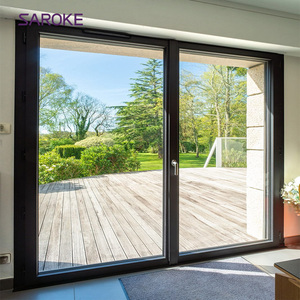
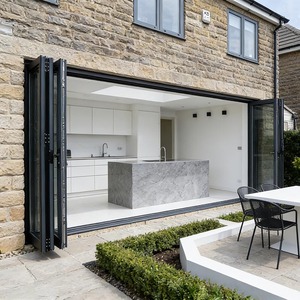
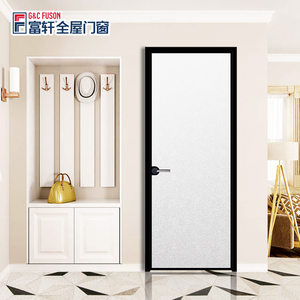
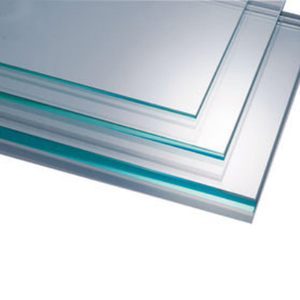
The Central and Eastern European (CEE) construction market is undergoing a structural paradigm shift toward off-site prefabrication, driven by severe labor shortages, rising traditional masonry construction costs, and stringent European Union energy mandates. Hungary, positioned at the logistical heart of Europe, has emerged as a major hub for modern industrialized housing solutions. As a premier Custom OEM Prefabricated Aluminium Houses Factory & Supplier, we engineer and export fully customizable, high-precision aluminium structural housing modules and integrated thermal architectural glazing directly to developers, general contractors, modular home distributors, and resort operators across Hungary.
Aluminium (specifically high-strength 6063-T6 structural grade alloy) represents the pinnacle of modern modular materials. Unlike traditional timber frames which suffer from volumetric swelling, warping, and organic degradation under humid conditions, or structural steel frames prone to surface corrosion and thermal bridging, extruded aluminium structural systems offer an unparalleled strength-to-weight ratio, structural elasticity, infinite recyclability, and absolute resistance to atmospheric decay. When integrated with advanced polyamide (PA66) thermal breaks and low-emissivity (Low-E) insulated glass units (IGUs), our prefabricated aluminium housing systems comfortably outperform strict Central European thermal regulations while reducing site erection timelines by up to 70%.
To withstand Central Europe's continental climate—characterized by freezing winter weather with heavy snow loads down to -20°C and scorching summer heat waves exceeding 38°C—prefabricated structural systems require exact material physics calculations. Our OEM factory utilizes structural Eurocode 9 (EN 1999: Design of Aluminium Structures) and EN 1090-2 / EN 1090-3 manufacturing execution standards. Each housing module is modeled using Finite Element Analysis (FEA) to ensure structural integrity against severe localized wind loads ($q_b$ pressures up to $0.55 \text{ kN/m}^2$) and ground snow loads ($s_k$ up to $1.25 \text{ kN/m}^2$) typical of the Hungarian Danubian plain and northern upland regions.
Furthermore, surface treatment is executed using Qualicoat Class 2 architectural-grade powder coating or anodizing up to 25 microns thick. This process ensures chemical inertness against UV degradation, acid rain, and environmental pollutants, guaranteeing a maintenance-free lifespan exceeding 50 years without frame oxidation or color degradation.
The table below highlights the performance advantages of engineered OEM prefabricated aluminium house modules compared to traditional brick masonry and lightweight timber frame construction in Hungary:
| Performance Metric | OEM Prefabricated Aluminium House | Traditional Brick/Masonry | Lightweight Timber Modular |
|---|---|---|---|
| Structural Frame Lifespan | 50+ Years (Zero Rot / Rust) | 50+ Years (Cracking Risk) | 20–30 Years (Moisture Degradation) |
| Thermal Transmittance ($U_w$) | 0.75 – 0.90 W/m²K (NZEB Pass) | 1.10 – 1.40 W/m²K (Thick Insulation Needed) | 0.85 – 1.10 W/m²K (Vapor Barrier Critical) |
| On-Site Erection Speed | 3 to 7 Days per Unit | 6 to 12 Months | 2 to 4 Weeks |
| Acoustic Insulation ($R_w$) | 42 dB to 48 dB (Multi-Layer Glass) | 45 dB to 52 dB | 32 dB to 38 dB (Hollow Echo Risk) |
| Seismic & Wind Elasticity | High Structural Flexibility (Eurocode 9) | Brittle Structural Response | Moderate Elasticity |
| Recyclability & Circularity | 100% Recyclable Aluminium Profile | 0% (Demolition Waste to Landfill) | Limited (Treated Wood Waste) |
From Balaton luxury eco-resorts to Budapest urban infill and countryside agricultural tourism, our factory customizes modular prefabricated aluminium houses to specific regional topography and municipal building requirements.
In Hungary’s prime tourism regions like Lake Balaton (Siófok, Balatonfüred, Tihany) and Lake Velence, strict environmental micro-zoning regulations ban wet construction work during high season. Our OEM prefabricated aluminium houses provide the ultimate solution: off-site factory assembly followed by rapid crane installation on micro-pile foundations within 48 hours. Featuring oversized double/triple glazed panoramic bi-fold walls, our structures resist high lake-breeze humidity without rusting, allowing boutique hospitality operators to unlock rapid ROI without disturbing natural shorelines.
Urban real estate in Budapest’s key districts (Pest suburbs like Zugló and Buda hill districts like II. and XII. kerület) faces high land cost and tight site access. The ultralight structural footprint of our aluminium prefab houses allows them to be hoisted onto flat rooftops as modern penthouse extensions or placed in restricted residential gardens as soundproof home offices, auxiliary living units, or rental annexes without exceeding structural slab weight capacities.
Hungary’s world-famous wine regions require elegant, minimalist hospitality structures that harmonize with rolling vineyard landscapes. Custom OEM aluminium houses engineered with slim-profile accordion glass walls create climate-controlled tasting rooms and luxury guest chalets. Thermal glass coatings filter harsh seasonal glare while preserving panoramic vineyard views, protecting high-value wine inventory from temperature swings.
With major industrial expansion driven by automotive and battery gigafactories in Debrecen, Győr, and Kecskemét, industrial contractors require high-durability modular administration offices, security check-in cabins, and engineer living quarters. Our heavy-duty aluminium modular units offer fire-retardant sandwich panel infills, integrated smart lock access control, and complete mobility for long-term industrial site redeployment.
Navigating the architectural and statutory landscape in Hungary requires strict adherence to Hungarian national building standards and European directives. Property developers and buyers can no longer rely on uncertified imported prefabricated units. Our manufacturing processes directly incorporate local compliance requirements into our OEM structural designs:
Under current Hungarian construction regulations, all new residential buildings submitted for occupancy certificates must meet the Near-Zero Energy Building (NZEB) standard. This mandates overall building envelope thermal insulation coefficients below $0.24 \text{ W/m}^2\text{K}$ for walls and frame-plus-glass thermal transmittance ($U_w$) below $1.0 \text{ W/m}^2\text{K}$ for windows and exterior openings. Our prefabricated houses utilize multi-cavity thermal break extrusions injected with high-density polyurethane foam (PU) and argon gas-filled Low-E triple glazing, ensuring effortless compliance during energy performance certificate (ÉTK) audits.
The Hungarian ÉMI Non-profit Llc. (Építésügyi Minőségellenőrző Innovációs Kft.) sets stringent guidelines for construction product fitness. Our factory supplies comprehensive technical documentation, material batch testing certificates, structural static calculations, and CE declarations of performance (DoP) compliant with Regulation (EU) No 305/2011 (CPR). This allows local architectural partners and structural engineers in Hungary to easily integrate our OEM components into local ÉTDR (Építésügyi hatósági engedélyezési eljárásokat Támogató elektronikus Dokumentációs Rendszer) building permit filings.
With increasing traffic along major Hungarian transport arteries (M1, M3, M7 motorways and Budapest transit routes), acoustic isolation is a mandatory comfort metric. By combining double-seal heavy compression rubber gaskets with sound-dampening laminated acoustic glass ($6\text{mm acoustic PVB} + 6\text{mm clear}$), our aluminium prefabricated modular walls achieve a Weighted Sound Reduction Index ($R_w$) up to 45 dB, creating silent interior sanctuaries even in noisy urban environments.
By eliminating middleman trading distributors, we offer Hungarian developers and contract buyers direct access to enterprise-grade OEM manufacturing, rigid quality assurance, and wholesale pricing advantages.
We work from your architectural CAD / BIM drawings or provide in-house design engineering. Every element—wall panel thickness, profile color, floor layout, door hinge placement, and glass coating—is tailored to your precise OEM project requirements.
Our 20,000 m² automated production plant features 5-axis CNC machining centers, automated corner punching, and precision laser cutting tools that maintain manufacturing tolerances within ±0.5mm, ensuring frictionless on-site bolt-together module assembly.
Every structural extrusion undergoes rigorous physical load testing, air permeability testing (EN 12207 Class 4), watertightness verification (EN 12208 Class E900), and coating thickness audits before export packaging in sea-worthy reinforced wooden crates.
Clear, transparent technical answers covering delivery, building permits, thermal insulation, structural safety, and custom manufacturing processes.
We pack prefabricated aluminium structural components, wall panels, and glass modules into flat-pack modular shipping configurations (or standard 40ft HQ shipping containers). Shipments are dispatched via ocean freight directly to major European ports (such as Koper or Hamburg) and transferred by direct intermodal rail or flatbed truck to your project site anywhere in Hungary (Budapest, Debrecen, Szeged, Miskolc, Pécs, Győr, etc.). All glass elements are packed in steel-framed A-frame crates to guarantee zero transit damage.
Yes. All structural engineering static calculations are based on Eurocode 9 (EN 1999) standards. We engineer our aluminium frames to exceed Hungarian national wind load requirements ($q_b = 0.55 \text{ kN/m}^2$) and regional snow accumulation loads ($s_k \ge 1.25 \text{ kN/m}^2$). For high-altitude or wind-exposed locations, such as the Bükk or Mátra mountain districts, structural profile thickness is custom-reinforced up to 3.0mm.
Absolutely. By combining multi-cavity polyamide (PA66) thermal break profiles, insulated rockwool / PIR sandwich wall panels, and triple-pane Low-E glass with argon gas fills ($U_g = 0.6 \text{ W/m}^2\text{K}$), our complete modular building envelope meets or exceeds Hungary's NZEB requirements (7/2006 TNM decree), enabling your local engineer to secure building occupancy permits easily.
Because structural aluminium is significantly lighter than concrete or solid steel framing, lightweight foundation solutions can be used. Ground screw foundation anchors, micro-piles, or a basic reinforced concrete slab foundation are ideal. Ground screws are especially popular around Lake Balaton and rural areas because they require zero excavation and leave the natural landscape intact.
As a true factory manufacturer, we offer complete OEM customization. You can customize the exterior powder coating (any RAL color palette, anodic finishes, or wood-grain sublimation), architectural glass tinting (silver reflective, blue tint, low-iron ultra clear), floor plan configuration, interior partition walls, integrated electric roller shutters, smart lock entrance systems, and brand logo labeling on product packaging.
Once architectural shop drawings are formally approved, factory fabrication takes approximately 25 to 35 days (depending on bulk order volume). Transit time via ocean and land freight to Hungary generally takes an additional 30 to 40 days. We recommend allocating a total lead time of 60 to 75 days from initial deposit to site delivery.
We provide full export documentation including commercial invoices, packing lists, Bill of Lading (B/L), CE Certificate of Conformity, and Certificates of Origin. We work under flexible Incoterms (FOB, CIF, or DDP). Under DDP (Delivered Duty Paid), our logistics partner manages customs clearance, import tariffs, and local Hungarian VAT handling, delivering the finished products directly to your designated site address.