Custom Extruded 6063-T5 Profiles with Qualicoat® Powder Coating & Heat-Transfer Wood Grain Finishes for Maximum Weathering Resistance
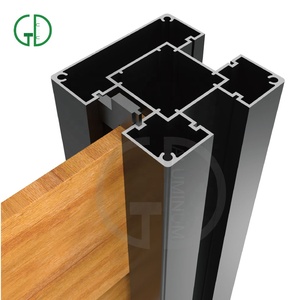
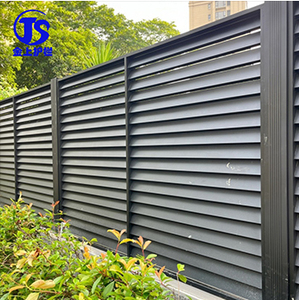
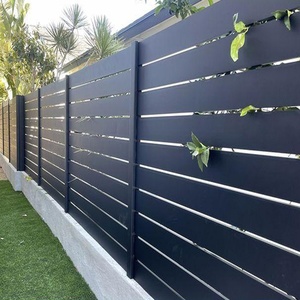
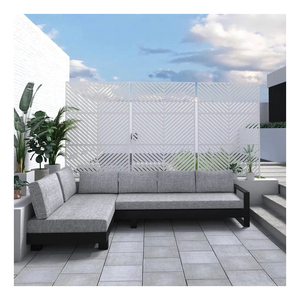
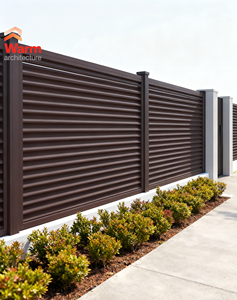
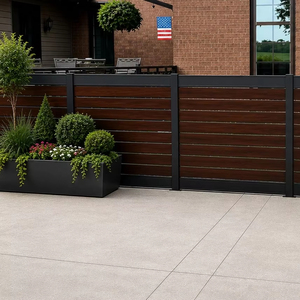
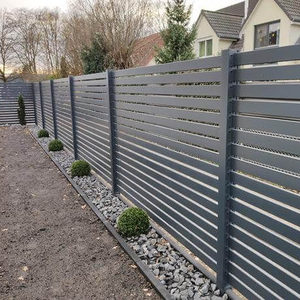
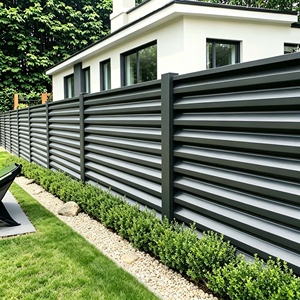
Brazil's architectural landscape is undergoing a major transformation in residential perimeter security, commercial enclosures, and luxury estate developments. Historically, traditional wrought iron, carbon steel, and wood fencing dominated Brazilian urban centers such as São Paulo, Rio de Janeiro, Belo Horizonte, and Curitiba. However, severe climate challenges—ranging from high tropical humidity and torrential rainfall to intense ultraviolet radiation and harsh coastal salt spray (maresia) along Brazil's 7,491 km coastline—have exposed the systemic vulnerabilities of traditional fencing materials.
As a leading Chinese architectural aluminum extrusion factory and export supplier, we specialize in high-tensile, corrosion-resistant Alloy 6063-T5 and 6061-T6 aluminum fencing systems customized specifically for the South American market. By replacing high-maintenance steel and decomposing wood with precision-engineered modular aluminum slat panels, louvre systems, and laser-cut security screens, Brazilian civil engineering firms, real estate developers, and hardware wholesalers can significantly enhance structural longevity while drastically reducing lifetime maintenance costs.
Information Gain Key Insight: Unlike standard carbon steel fences that oxidize within 18–24 months in humid Brazilian coastal regions (e.g., Santos, Florianópolis, Salvador), architectural aluminum forms an auto-passivating natural oxide layer reinforced by 60–80 µm electrostatically applied thermosetting powder coatings, providing maintenance-free protection for over 20 years.
To assist Brazilian procurement engineers, architects, and importers in making data-driven sourcing decisions, the table below provides an engineering-level comparison between our extruded 6063-T5 aluminum fencing systems, traditional carbon steel, and natural hardwood (e.g., Ipê, Cumaru):
| Performance Vector | Extruded Aluminum 6063-T5 | Galvanized / Carbon Steel | Brazilian Hardwood (Ipê/Cumaru) |
|---|---|---|---|
| Corrosion Resistance (Maresia) | Exceptional (Passivated + PVDF/Powder) | Poor to Moderate (Rusts at welds) | Organic decay, mold & termite risk |
| Structural Weight to Strength | High (~2.7 g/cm³ with 180+ MPa Yield) | Heavy (~7.85 g/cm³, high hinge wear) | Variable weight, warps under moisture |
| Surface Finish Durability | Qualicoat® Class 2 Powder / Sublimation | Frequent repainting required (1-2 yrs) | Requires yearly oiling & lacquering |
| Wind Load Resistance (150 km/h) | Certified engineered post-and-rail locks | High initial, degrades as rust eats posts | Splits under high mechanical stress |
| Total Cost of Ownership (10 Yrs) | Lowest (Zero maintenance expense) | High (Repeated sanding & repainting) | Very High (Material replacement) |
Engineered Modular Systems Designed for Diverse Microclimates and Architectural Requirements
Ideal for luxury residential developments in Alphaville, Campinas, and Greater São Paulo. Our high-privacy horizontal slat panels and automated louvre security gates offer sleek modern aesthetics, noise attenuation, and perimeter integrity compliant with municipal safety codes.
Extensively installed along coastal corridors such as Balneário Camboriú, Búzios, and Recife. Engineered with 6063-T5 aluminum profiles subjected to a 2,000-hour neutral salt spray test (ASTM B117), completely immune to sea salt erosion, high humidity, and sand abrasion.
Heavy-duty perimeter fencing and security enclosures engineered for logistics parks along the Rodovia dos Bandeirantes and Porto de Santos corridors. Features anti-climb vertical slats, reinforced hollow posts, and rapid modular bolt-together assembly.
Durable perimeter fencing solutions for executive ranches, vineyard borders, and processing facilities in Mato Grosso, Paraná, and Rio Grande do Sul. Resists agricultural chemical runoff, intense solar radiation, and extreme seasonal temperature swings.
Sourcing building materials from China to Brazil requires a clear understanding of evolving local market demands and regulatory frameworks. Over the past five years, B2B procurement data indicates three dominant trends driving the rapid adoption of Chinese aluminum fencing systems across South America:
Brazilian buyers love the natural luxury of timber but despise termite destruction and weathering maintenance. Our 3D vacuum heat-transfer wood grain finish delivers authentic Ipê and Walnut appearances on rust-proof aluminum hollow profiles.
Labor costs in Brazil for masonry and on-site welding continue to rise. Importers are heavily prioritizing prefabricated "DIY-type" aluminum fencing kits with snap-in louvres and pre-drilled post brackets that reduce installation time by up to 65%.
Aluminum is 100% infinitely recyclable without losing its mechanical properties. Brazilian commercial construction projects pursuing AQUA-HQE or LEED green building certifications heavily prefer aluminum over PVC or chemically treated lumber.
To successfully market imported aluminum fencing systems in Brazil, suppliers must ensure structural conformity with national standards established by the Associação Brasileira de Normas Técnicas (ABNT):
Direct Factory Production, End-to-End Precision Quality Control & Comprehensive Export Support for Brazil
Operating multiple extrusion presses ranging from 800T to 3,600T, automated CNC milling centers, precision laser cutters, and full-length punching machines to handle complex custom profile designs.
Equipped with vertical automatic powder coating lines and Italian thermal transfer wood grain equipment, ensuring zero peeling, chipping, or fading under extreme climate conditions.
Specialized protective film wrapping, corner guards, and steel crate bundling designed to maximize container volumetric utilization for ocean shipping to Port of Santos, Paranaguá, or Navegantes.
Technical, Commercial & Logistics Insights for Direct Importing from China to Brazil
We utilize marine-grade 6063-T5 aluminum alloy combined with multi-stage chemical pretreatment (chromate-free conversion) and Qualicoat® architectural powder coating. This process guarantees superior resistance against coastal salinity and atmospheric moisture, passing 2,000-hour neutral salt spray tests.
Aluminum fences, gates, and structured profiles generally fall under NCM Code 7610.90.00 (Outras obras de alumínio; estruturas e suas partes). Brazilian importers must possess a valid RADAR license. We provide full commercial documentation including Commercial Invoices, Packing Lists, Bill of Lading, and Certificate of Origin to streamline customs clearance.
Yes. Over 80% of our supply for the Brazilian market consists of OEM/ODM custom projects. Our engineering department reviews your CAD/BIM drawings, calculates wind load requirements, provides shop drawings for approval, and produces customized dies for custom profile shapes.
Standard manufacturing lead time is 20 to 25 days following shop drawing approval and deposit confirmation. Maritime transit time from Chinese main ports (Ningbo, Shanghai, Shenzhen) to major Brazilian ocean ports (Santos, Paranaguá, Rio de Janeiro) typically ranges from 30 to 40 days.
Absolutely. Our fences are designed with a patented snap-together interlocking slat mechanism and pre-machined post brackets. This non-welded modular system enables rapid field assembly using basic hand tools, significantly cutting down expensive local labor installation costs.
Every profile is individually sleeved in PE protective film, wrapped in heavy-duty waterproof craft paper, fitted with impact-absorbing foam edge protectors, and secured onto non-fumigation wood pallets or reinforced steel racks for safe container unloading via forklift.
Contact our structural engineering team today to request instant factory-direct price quotes, custom profile catalogs, or free sample kits delivered directly to your office in Brazil.