Explore commercial-grade, residential, and custom villa kitchen cabinetry designed for international trade standards and harsh climate durability.
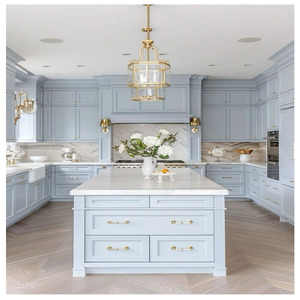
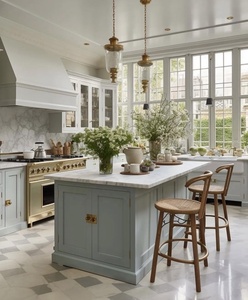
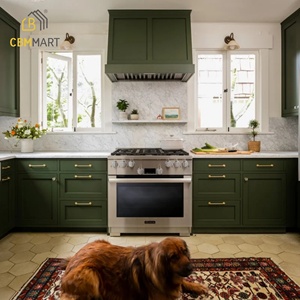
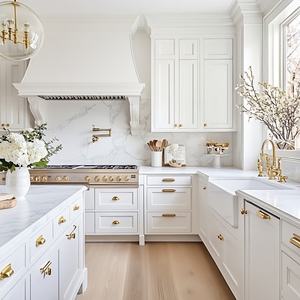
In the contemporary architectural and real estate development ecosystem, procuring kitchen cabinetry is no longer a simple transactional procurement task. It represents a complex engineering decision involving material science, structural longevity under variable microclimates, toxicological safety compliance, and supply chain logistics optimization. For general contractors, property developers, and wholesale distributors searching for a top trusted kitchen cabinets exporter & exporters, evaluating factory capabilities requires looking far beyond surface aesthetics.
Information Gain Key Takeaway: Modern international project procurement mandates a dual-layer verification process: verifying structural substrate moisture tolerance (e.g., TSCA Title VI Plywood vs. Marine-grade Particleboard) and auditing the manufacturer's automated CNC edge-banding precision to prevent VOC off-gassing and edge delamination over time.
The operational lifecycle of export kitchen cabinetry hinges on the structural integrity of its carcass (cabinet box). When exporting across climate zones—ranging from high-humidity coastal regions like Dubai and Florida to dry sub-zero inland environments—carcass materials must maintain structural equilibrium without warping, swelling, or losing screw-holding power.
| Substrate Type | Density & Compressive Strength | 24-Hour Swell Rate (Moisture) | Formaldehyde Standard | Primary Export Application |
|---|---|---|---|---|
| Multi-Layer Marine Plywood | 650 - 720 kg/m³ | < 4.0% (Superior) | CARB Phase 2 / ENF Grade | High-end Luxury Villas, Island Counter Units |
| HMR (High Moisture Resistance) Particleboard | 680 - 750 kg/m³ | < 8.0% (Standard Commercial) | EPA TSCA Title VI / E0 | High-rise Multi-family Residential Complexes |
| E0 High-Density MDF | 750 - 820 kg/m³ | < 10.0% (Requires Sealing) | E0 Grade / ISO 16890 | Intricately Routed Shaker Doors & Gloss Lacquer |
| Extruded Thermal-Break Aluminium Core | 2700 kg/m³ (Non-Wood) | 0.0% (Impenetrable) | Zero Formaldehyde (100% Eco) | Extreme Coastal, Outdoor Kitchens, Tropical Zones |
As demonstrated in technical testing, multi-layer cross-grain structural plywood bonded with waterproof WBP phenolic resins provides maximum dimensional stability. Meanwhile, engineered thermal-break aluminium carcasses represent an emerging frontier for architectural applications exposed to extreme humidity and pest pressures.
Our operational framework bridges international architectural standards with state-of-the-art export manufacturing facilities in major global manufacturing hubs (including Guangdong industrial manufacturing bases and Middle Eastern architectural fabrication centers like Al Sajaa, Sharjah). By maintaining direct oversight over precision cutting, automated drilling, zero-joint edge sealing, and pre-shipment assembly validation, we eliminate traditional intermediary friction and quality defects.
German Homag & Biesse 5-axis CNC routers execute cutting, grooving, and dowel drilling within a precise ±0.1mm tolerance, ensuring seamless RTA installation on-site.
Polyurethane (PUR) hot-melt adhesive edge banding creates a moisture-proof seal that resists steam temperatures up to 150°C and prevents edge swelling near dishwashers and cooktops.
Custom heavy-duty honeycomb cartoon packing with corner guards and moisture-absorbing silica gel packs guarantees container shipments arrive damage-free across global ports.
The international kitchen cabinet export industry is undergoing a structural transition driven by technological innovation, stringent green building certifications, and evolving architectural preferences. Key procurement trends shaping global real estate procurement over the next decade include:
Global procurement standards are moving beyond conventional E1 and even E0 formaldehyde classification toward the ENF (Non-Formaldehyde Added) standard (≤ 0.025 mg/m³). Leading exporters are now utilizing bio-based MDI resins derived from renewable soy proteins rather than traditional urea-formaldehyde adhesives. This shift is critical for commercial developers aiming to achieve LEED v4.1 and BREEAM Platinum green building certifications.
Pure wood kitchen systems often face operational challenges in humid or coastal climates due to thermal expansion and moisture absorption. The modern architectural trend heavily favors hybrid material systems: combining lightweight aluminium honeycomb cores for cabinet doors, fluted solid wood accent panels, micro-cement polymer coatings, and scratch-resistant PET (Polyethylene Terephthalate) thermal foils over moisture-resistant MDF.
Modern residential luxury developments demand silent, handleless user experiences. Overseas buyers are increasingly prioritizing cabinet exporters that pre-integrate concealed soft-closing systems (such as Blum Servo-Drive, Hettich Sensys, or DTC premium undermount slides) with built-in micro-adjustment screws to streamline final job-site installation.
With ocean freight rates subject to global market fluctuations, optimizing container volume efficiency has become a critical competitive differentiator. Precision RTA (Ready-To-Assemble) engineering allows exporters to pack up to 300% more cabinet volume into a standard 40-foot High Cube (40HQ) container compared to fully pre-assembled units, reducing per-unit freight overhead significantly for commercial importers.
Detailed engineering and commercial answers to common procurement questions asked by international buyers, project developers, and sourcing managers.
When evaluating a trusted kitchen cabinets exporter, request verified third-party lab testing reports including EPA TSCA Title VI or CARB Phase 2 compliance for wood substrates, ISO 9001 Quality Management certification, ISO 14001 Environmental Management, FSC (Forest Stewardship Council) chain-of-custody certificates for timber, and EN 14749 structural safety compliance for hardware and load-bearing shelf pins.
Reliable exporters utilize a multi-step CAD/CAM engineering workflow. First, detailed shop drawings (including elevation, floor plan, plumbing/electrical cutouts, and 3D rendering) are generated and signed off by the client. These drawings are directly imported into automated CNC software, ensuring zero discrepancy between approved drawings and factory panel machining. Additionally, mock-up units are assembled and checked pre-packing.
Standard manufacturing lead times for customized project orders range from 25 to 35 calendar days following shop drawing sign-off and deposit receipt. For standard modular RTA (Ready-to-Assemble) white shaker cabinets, production lead times can be compressed to 15-20 days. Ocean shipping transit times vary by destination port (e.g., 15-20 days to Middle East/UAE ports; 25-35 days to US West/East Coast ports).
For high-humidity or tropical environments, multi-layer waterproof Marine Plywood (bonded with WBP phenolic glue) or extruded Powder-Coated Aluminium Carcass systems offer the highest performance. Standard particleboard should be avoided unless specified as HMR (High Moisture Resistance) grade with full PUR polyurethane zero-joint edge seals on all sides.
High-gloss lacquered doors are protected by a protective PE film, wrapped in EPE foam sheets, reinforced with plastic corner protectors, and packed in heavy-duty 5-layer corrugated cartons. For glass-fronted aluminium doors or large stone/quartz countertops, custom fumigated solid plywood crates or steel-frame crates are constructed to withstand container movement and stacking forces.
Yes. Exporters can supply pre-drilled hinge mounting plates, pre-assembled drawer box runners, and pre-fitted pantry organizers (such as Blum, Hettich, Sugatsune, or DTC systems). For RTA flat-pack orders, precision pilot holes are CNC-machined into the carcass panels so local assembly crews can install functional hardware quickly without specialized tools.
While standard catalog items may have low MOQs (e.g., 1 full set for luxury custom villa projects), optimized commercial export pricing is typically structured around 1x20GP or 1x40HQ container loads (approximately 20 to 50 complete kitchen sets depending on cabinet size and assembly status). Shared LCL (Less than Container Load) shipping is also available for sample rooms and prototype approvals.
Reputable exporters provide a standard 5 to 10-year structural warranty on cabinet carcasses and door panels, along with lifetime warranties on soft-close hardware. For commercial export shipments, factories routinely include 1% to 2% spare door panels, edge banding rolls, hardware components, and touch-up paint kits inside the container to handle potential job-site mishaps without project delays.
Whether you are procuring cabinet packages for high-rise residential projects, luxury villa developments, or commercial wholesale distribution, our engineering team provides comprehensive shop drawings, material samples, and factory-direct pricing.