Explore our export-ready architectural profiles engineered to satisfy stringent global building codes, including AS2047, NFRC, CE, and BS EN standards. Direct factory pricing with complete CAD/BIM support.
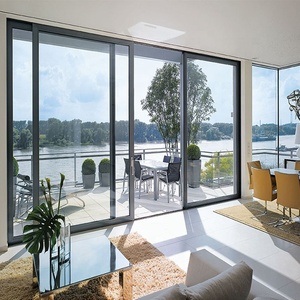
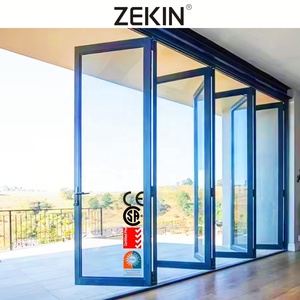
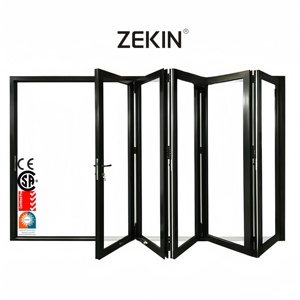
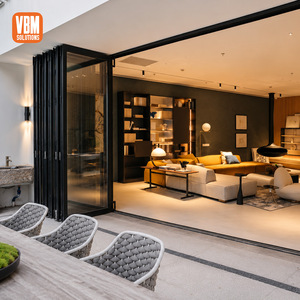
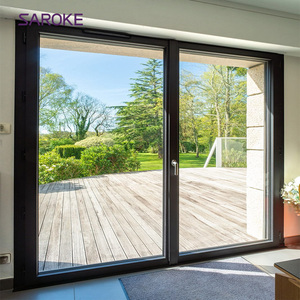
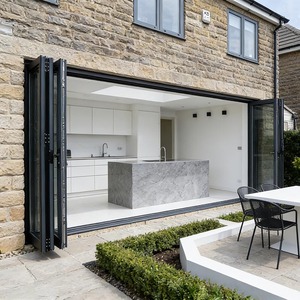
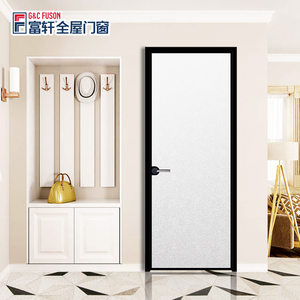
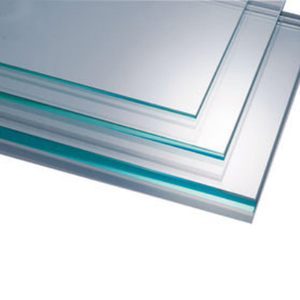
China's architectural aluminium door and window manufacturing ecosystem represents over 55% of global production output. For international commercial developers, facade engineers, and volume importers, sourcing directly from top-tier Chinese extrusion and assembly facilities provides an unmatchable balance of technological precision, material grade integrity, and capital efficiency.
Modern Chinese manufacturing has evolved far beyond low-cost fabrication into state-of-the-art automated production lines featuring 5-axis CNC profile machining centers, robotic corner crimping, continuous powder coating lines, and automated Insulated Glass Unit (IGU) assembly. This evolution ensures that leading Chinese exporters consistently deliver thermal break bi-fold systems, ultra-slim sliding patio doors, and heavy-duty casement systems tailored to rigorous Western compliance protocols.
By unifying structural engineering, alloy extrusion, surface finishing, double-glazing, and rigourous QA protocols under one roof, we eliminate third-party markup and control precision tolerances.
We utilize primary 6063-T5 and 6060-T66 architectural grade aluminum extrusions, reinforced with imported Polyamide PA66GF25 (25% glass fiber reinforced) thermal break strips. This structural design drastically reduces thermal transmittance (U-factors as low as 1.2 W/m²K) and prevents condensation under extreme climatic variances.
Our sliding and bifold door systems integrate multi-layer continuous EPDM gasket sealing coupled with multi-point locking hardware. Combined with argon-filled, double or triple tempered Low-E glazing, our doors deliver Sound Transmission Class (STC) ratings up to 45 dB and wind pressure resistance up to 5000 Pa.
Operating dedicated PVDF fluorocarbon coating, Qualicoat Class 2 certified powder coating, and anodic oxidation lines, our frame finishes guarantee superior resistance against coastal salt spray corrosion, intense UV radiation, chalking, and scratching across 15+ year operational lifespans.
| Technical Parameter | Standard Export Specification | High-Performance Thermal Break Series | Testing Standard / Compliance |
|---|---|---|---|
| Aluminum Alloy Grade | 6063-T5 Architectural Profile | 6060-T66 High Tensile Strength Extrusion | GB/T 5237 / ASTM B221 |
| Thermal Insulation Strip | PVC / Standard Nylon Strip | PA66GF25 Technoform Polyamide Strip | EN 14024 Compliance |
| Glazing Unit Options | 5mm + 12A + 5mm Tempered Glass | 6mm Low-E + 16Ar + 6mm Triple Laminate IGU | BS EN 12150 / AS/NZS 2208 |
| Acoustic Rating (STC) | 28 - 32 dB Noise Reduction | 38 - 45 dB High Acoustic Dampening | ASTM E90 / ISO 717-1 |
| Water Penetration Resistance | 300 Pa Static Pressure | 600 Pa + Drained Sub-Sill Systems | AS2047 / ASTM E331 |
| Hardware Service Life | 25,000 Cycle Tested Roller Units | 100,000+ Cycle Heavy-Duty Stainless Steel Carriers | EN 13126 / AAMA 904 |
As commercial architecture pivots toward decarbonization, structural minimalism, and building automation, Chinese export manufacturers are pioneering several critical advancements.
Architectural preferences are heavily shifting toward floor-to-ceiling glass facades with completely concealed frame profiles. Modern slimline patio sliding doors feature interlocking vertical mullions as narrow as 18mm to 21mm, enabling panoramic views while maintaining wind load structural deflection limits (L/175 or L/250).
Future-proof door systems are incorporating dynamic electrochromic glazing (PDLC switchable privacy glass) and embedded photovoltaic cell glass units. This allows architectural fenestration to function simultaneously as active solar energy harvesting panels and dynamic thermal regulators.
Leading Chinese exporters are transitioning toward green aluminum smelters powered by hydro-electric energy, utilizing up to 75% recycled scrap aluminum (post-consumer and post-industrial). Sourcing low-carbon aluminum dramatically lowers Scope 3 embodied carbon emissions for Western green building certifications such as LEED v4 and BREEAM.
Bi-fold and accordion wall systems are increasingly spec'd with motorized multi-point locking actuators, biometric access controls, and integrated magnetic reed sensor contacts for real-time security monitoring via building management networks.
A rigorous quality control framework protects developers and importers from profile warping, air leakage, glass delamination, and shipping damages. Follow this step-by-step audit strategy.
Ensure that structural door profiles satisfy minimum wall thickness guidelines. Structural outer frames should possess a minimum nominal wall thickness of 2.0mm to 3.0mm according to AS2047 or international heavy-commercial glazing requirements. Reject substandard non-structural extrusions below 1.4mm thickness for exterior installations.
Verify that all tempered and laminated glass panes feature permanent, visible ceramic ink certification stamps (e.g., SGCC, AS/NZS 2208, CE EN 12150). Request factory test certificates for Heat Soak Testing (HST) to mitigate risks of spontaneous glass breakage caused by nickel sulfide (NiS) inclusions.
Aluminum frame profiles must be wrapped in non-adhesive protective film, padded with corner guards, and fully encased inside steel-reinforced fumigation-free plywood crates. Insist on vertical glass rack loading inside open-top or high-cube containers to eliminate transit vibration fractures during ocean transport.
Clear, direct answers regarding factory MOQ, lead times, custom CAD shop drawings, and international door performance certifications.
Top Chinese manufacturers maintain dedicated international compliance engineering divisions. Profiles are custom extruded to match exact structural depth requirements (e.g., 100mm, 150mm system depth) and are subjected to third-party lab testing (NFRC, AAMA, AS2047) for air infiltration, water resistance, and structural deflection under typhoon wind loads.
Standard custom fabrication timelines typically span 25 to 35 calendar days following CAD shop drawing approval and deposit receipt. For specialized anodized or custom RAL powder coat colors, an additional 5 to 7 days may be required for chemical surface treatment runs.
Yes. While mass production extrusion runs favor high volume, top export factories accommodate small luxury residential project packages (e.g., 50 m² to 200 m²) by stocking standard architectural thermal break extrusions in versatile architectural finishes (matt black, anodized silver, dark bronze).
Non-thermal break profiles feature a solid aluminum frame connecting the exterior and interior air zones, leading to fast heat transfer and condensation. Thermal break profiles introduce a low-conductivity polyamide strip (PA66GF25) separating the interior and exterior aluminum sections, cutting heat gain by up to 60% and lowering building HVAC power usage.
Buyers can specify premium domestic Chinese brands (e.g., Kin Long, Hopo, Cmech) or top-tier European hardware (e.g., Siegenia, Hoppe, Sobinco, Roto). Premium hardware ensures stainless steel corrosion resistance, multi-point locking security, and smooth roller motion rated for over 100,000 opening cycles.
Partner with a verified top China aluminium doors factory. Request complete technical specification sheets, structural CAD details, and competitive direct-factory price estimates for your project.