Explore our OEM/ODM factory-direct door and structural safety glass product line, specifically engineered to surpass ASTM, AS2047, and EN 12150 standards for acoustics, thermal insulation, and wind load capacity.
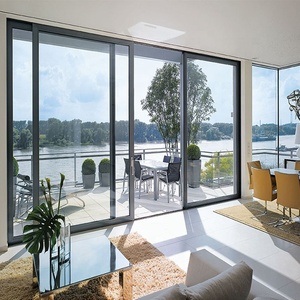
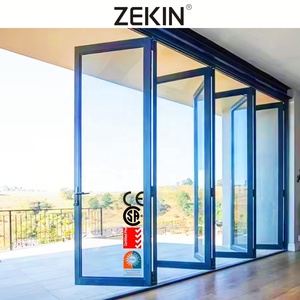
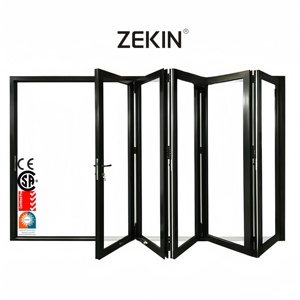
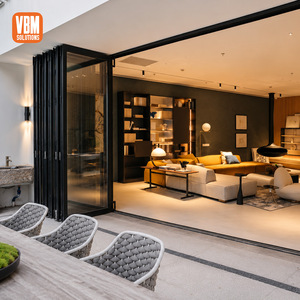
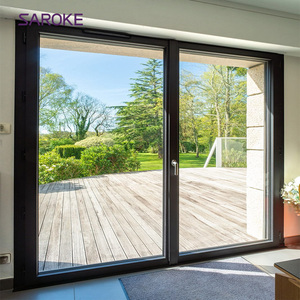
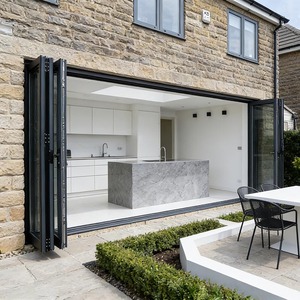
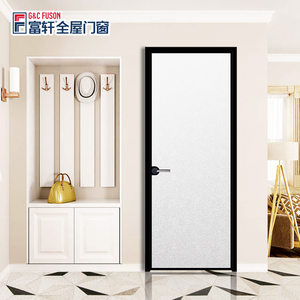
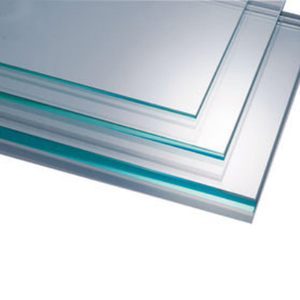
Operating out of our advanced fabrication facility in Al Sajaa Industrial Area, Sharjah, Skyline Aluminium integrates custom extrusion machining, glass tempering, double-glazing line assembly, and strict ISO-certified quality assurance under one roof.
Our workshop houses high-precision double-head miter saws, automatic corner-crimping machinery, and 5-axis CNC machining centers. By keeping cutting, milling, and assembly in-house, we maintain sub-millimeter tolerances across complex architectural glass envelopes.
Middle Eastern and tropical climates demand extreme resistance against 50°C summer heats, sand abrasion, and high solar heat gain. We incorporate Polyamide PA66GF25 thermal breaks and soft-coat Low-E double glazing to cut air conditioning loads by up to 35%.
Every batch of float glass, PVB interlayer film, and aluminum alloy 6063-T6 undergoes rigorous raw-material inspection. We test glass fragmentation per EN 12150 standard and verify seal durability with argon gas fill monitors to eliminate field failures.
To assist architectural consultants, structural engineers, and commercial procurement officers in selecting the optimal glass assembly, the matrix below details technical performance indicators across our standard OEM glass configurations.
| Glass Build-Up Type | Visible Light Transmittance (VLT) | Solar Heat Gain (SHGC) | U-Value (W/m²K) | Acoustic Rating (STC) | Recommended OEM Application |
|---|---|---|---|---|---|
| 6mm Clear Tempered Safety Glass | 88% | 0.81 | 5.7 | 31 dB | Interior Office Partitions, Shower Doors |
| 10mm Toughened Monolithic Glass | 86% | 0.77 | 5.5 | 35 dB | Retail Shopfronts, Glass Balustrades |
| 6mm Low-E + 12Ar + 6mm Clear IGU | 65% | 0.34 | 1.6 | 39 dB | Residential Windows, Exterior Patio Doors |
| 6mm + 1.52SGP + 6mm Laminated | 78% | 0.68 | 4.8 | 41 dB | High-Wind Facades, Structural Glass Canopy |
| 8mm Triple Low-E + 16Ar + 8mm IGU | 52% | 0.22 | 1.1 | 44 dB | Near-Zero Energy Buildings (NZEB), Luxury Villas |
As carbon-neutral building codes, stringent acoustic insulation rules, and dynamic architectural shapes redefine modern construction, commercial procurement teams must stay ahead of key technical developments in architectural glazing.
Traditional Double Glazed Insulated Glass Units (IGUs) rely on 12mm to 16mm argon-filled air gaps to slow conductive heat transfer. However, the commercial emergence of Vacuum Insulated Glass (VIG) achieves U-values as low as 0.60 W/m²K within a total profile depth of under 10mm. By creating a microscopic vacuum chamber held apart by micro-pillars, VIG completely removes convective heat gain, allowing high-rise developments to reduce structural dead loads while fulfilling passive house standards.
Static Low-E coatings are rapidly giving way to dynamic, electrically switchable electrochromic glass and multi-layer off-line magnetron sputtering. These smart glass units dynamically adjust Visible Light Transmittance (VLT) and Solar Heat Gain Coefficient (SHGC) in response to solar position sensors or Building Management Systems (BMS). Procurement trends indicate a 40% year-over-year surge in developer inquiries for automated smart-tinting glass facade systems in premium commercial towers.
International sustainability benchmarks such as LEED v4.1 and BREEAM now scrutinize the embodied carbon of aluminum frame alloys. Top-tier OEM/ODM suppliers are transitioning to recycled aluminum profiles (e.g., Hydro CIRCAL or 75%+ post-consumer scrap billets) melted in renewable-powered furnaces. Utilizing recycled 6063-T6 alloy cuts profile embodied carbon from 18 kg CO₂/kg down to under 4.0 kg CO₂/kg without sacrificing tensile strength or anodizing finish aesthetics.
Modern architectural aesthetics favor completely frameless exterior facades and flush all-glass corners. Structural Silicone Glazing (SSG) uses high-modulus structural silicones to bond glass panes directly to aluminum substructures without visible external metal pressure plates. Concurrently, Building-Integrated Photovoltaics (BIPV) embed thin-film solar cells directly inside laminated glass units, turning passive glass facades into active electrical power generators.
To eliminate defects such as glass spontaneous breakage from Nickel Sulfide (NiS) inclusions or gas leakage in insulated units, our Al Sajaa production site enforces an uncompromising quality control pipeline.
Optical polariscope inspection of raw float glass sheets to identify localized internal stresses and thickness variance prior to cutting.
Precision diamond wheel edge grinding followed by forced-convective tempering to guarantee surface compressive stress > 90 MPa.
Automated primary butyl application and secondary structural silicone sealing with spark-test gas concentration checks > 90% Argon.
Full-scale pre-shipment assembly testing for air infiltration (ASTM E283), water penetration (ASTM E331), and structural wind pressure.
In-depth technical responses covering minimum order quantities, certification validation, shipping logistics, and material selection for international contractors and developers.
Our factory fabricates a complete architectural range, including thermally broken aluminum sliding doors, bi-fold doors, casement windows, frameless glass office partitions, structural glass fins, spider glass curtain walls, shower enclosures, aluminum kitchen cabinets, aluminum pergolas, and heavy-duty site security cabins. We offer both custom project-based fabrication and high-volume OEM profile manufacturing for overseas distributors.
All glass and profile processing adheres strictly to standardized testing protocols. Our safety glass is heat-treated to meet EN 12150 fragmentation criteria (minimum 40 particles per 50x50mm square upon impact). Our double glazed thermal break window and door series undergo third-party laboratory testing for NFRC 100/200 thermal performance ratings and AS2047 Australian window standards for wind pressure and water deflection.
For standard architectural profile colors (e.g., RAL 9016 White, RAL 7016 Anthracite Grey, or Anodized Silver), processing and assembly typically require 2 to 3 weeks after final shop drawing approval. For custom OEM aluminum die creation and specialized glass laminates (such as SGP structural interlayers or custom Low-E coatings), initial die machining takes 10 to 14 days, followed by a 3-week production run.
Architectural glass units are packed in heavy-duty fumigated steel-bound wooden A-frame crates with rubber corner protectors, plastic stretch wrap moisture barriers, and shock-absorbing cork separators between each glass sheet. Crates are loaded via overhead crane and secured inside sea containers using high-tensile polyester strapping and timber bracing to withstand maritime movement.
Polyamide 66 reinforced with 25% glass fiber (PA66GF25) shares almost the exact linear coefficient of thermal expansion as aluminum alloy (approx. 2.3 x 10⁻⁵ /K). This ensures that when the outer aluminum frame heats up to 70°C under direct sunlight while the interior stays cooled at 22°C, the thermal break bar expands and contracts at the same rate without shear delamination, structural buckling, or seal failure—unlike cheap PVC alternatives.
Yes. Our tempering furnaces and glass processing lines can process jumbo glass dimensions up to 3,300mm x 6,000mm in monolithic, laminated, and insulated glass configurations. Oversized units are paired with heavy-duty stainless steel concealed rollers and reinforced aluminum mullions capable of supporting panel weights exceeding 450 kg per leaf.
Whether you require bulk OEM profile extrusions, custom double glazed window packages, or soundproof bi-fold patio door systems, our engineering team provides complete shop drawings, BOQ estimation, and factory-direct pricing.
Inquire Now