
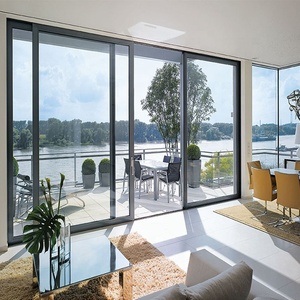
Residential Modern Soundproof Aluminum Alloy Glass Patio Sliding Door Finished Double Glazed Tempered Glass 5+ Year Warranty
Double Glazed
Inquire Now
Explore our high-performance OEM product lineup, manufactured to international AS2047, NFRC, EN 12150, and SGCC safety standards for global export.
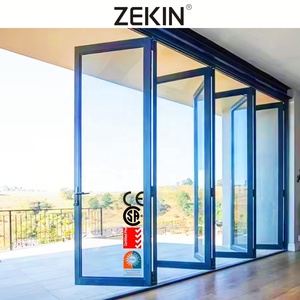
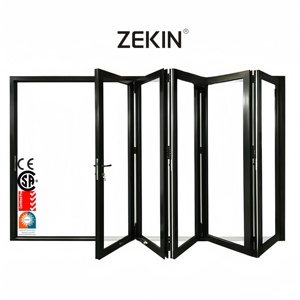
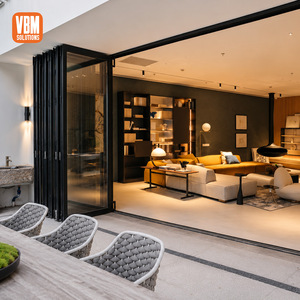
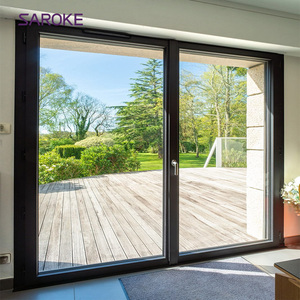
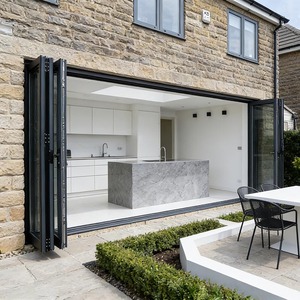
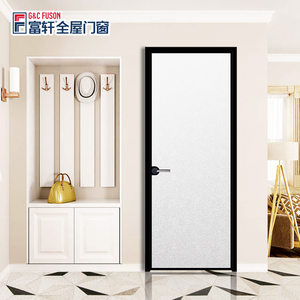
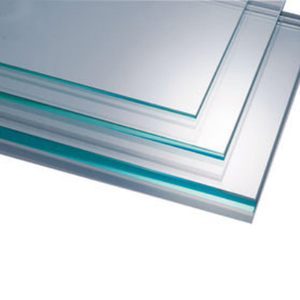
In contemporary architectural engineering and high-volume OEM manufacturing, tempered safety glass (fully toughened glass) stands as the structural backplate of modern building envelopes, luxury interior partitions, high-span sliding systems, and energy-efficient double/triple-glazed insulating units (IGUs). As global building codes enforce rigorous wind-load tolerances, thermal performance limits, and human-impact safety directives (such as ANSI Z97.1, EN 12150, and AS/NZS 2208), procurement teams and structural engineers are moving beyond generic off-the-shelf glass products.
The modern global market demands **Custom OEM Cut-to-Size Tempered Glass** engineered with sub-millimeter tolerances (±0.5mm), customized ceramic fritting, specialized Low-E silver coatings, and verified Heat-Soak Testing (HST) to mitigate spontaneous breakage caused by Nickel Sulfide (NiS) inclusions. This document delivers comprehensive technical analysis, strategic procurement frameworks, and emerging industry trends for international B2B buyers, main contractors, and facade engineers.
Evaluating OEM glass suppliers solely on per-square-meter FOB rates frequently exposes project owners to catastrophic field failures, glass bow and warp distortions, optical distortion, and costly site delays. True procurement efficacy requires auditing a supplier's internal tempering furnace convection technology, CNC edge-polishing precision, and ISO-certified Quality Control (QC) protocols.
From raw float glass cutting to advanced tempering, double-glazing assembly, and custom aluminum extrusion integration, our integrated facility guarantees single-source accountability.
Equipped with state-of-the-art forced-convection tempering furnaces, dual-edge CNC grinding lines, and automatic waterjet cutout machinery. We process flat clear, ultra-clear low-iron, tinted, and Low-E glass substrates from 4mm to 19mm with strict planarity control.
To prevent spontaneous explosion of tempered glass in high-rise facades and overhead canopy installations, 100% of our architectural structural glass batches undergo Heat Soak Testing in accordance with EN 14179-1 standards, eliminating unstable NiS phase transformations.
Our glass and aluminum door/window systems carry comprehensive international certifications including Australian AS2047 & AS/NZS 2208, North American NFRC & SGCC/IGCC, and European CE EN 12150 marks, enabling seamless customs clearance and compliance sign-offs.
We integrate tempered safety glass into custom-extruded aluminum frames featuring multi-chamber polyamide thermal break strips, acoustic EPDM gaskets, and Argon-filled insulating spacers. Achieves Sound Transmission Class (STC) ratings up to 45 dB and SHGC values down to 0.23.
Export glass shipments utilize heavy-duty custom steel or fumigated hardwood A-frame crates, inter-layer anti-fungal paper separation, edge protection guards, and desiccant packs to withstand long-distance container freight without sea-salt moisture damage or breakage.
Understanding surface compression dynamics and structural behavior under high wind loads, thermal stress, and impact forces.
The thermal tempering process involves heating standard annealed float glass in a furnace to approximately 620°C to 680°C (above the glass transition temperature), followed by rapid, controlled forced-air quenching. This quenching rapidly cools the outer surfaces of the glass pane while the inner core cools at a slower rate. As the central core contracts, it induces intense **compressive stress on the exterior surfaces** (typically ≥ 90 MPa / 13,000 PSI) balanced by **tensile stress within the interior core**.
Because glass fails under tensile forces acting upon surface microscopic flaws, the high surface compression counteracts applied bending stresses (such as extreme storm wind loads). Fully tempered glass exhibits approximately **4 to 5 times the mechanical bending strength and thermal shock resistance** of standard annealed glass. When broken, the release of stored strain energy causes the pane to fracture instantly into small, blunt, relatively harmless dice-like fragments rather than jagged, razor-sharp shards.
| Glass Type Category | Surface Compression (MPa) | Bending Strength (N/mm²) | Thermal Shock Tolerance (ΔT) | Fracture Pattern & Safety Level |
|---|---|---|---|---|
| Annealed Float Glass | < 20 MPa | 40 - 50 N/mm² | ~ 40°C | Large, razor-sharp dangerous shards (Non-Safety) |
| Heat-Strengthened Glass | 24 to 52 MPa | 70 - 80 N/mm² | ~ 100°C | Large pieces remaining in frame; no spontaneous NiS explosion |
| Fully Tempered Safety Glass | ≥ 90 to 150 MPa | 120 - 200 N/mm² | ~ 200°C to 250°C | Small dice fragments (EN 12150 Safety Compliant) |
| Tempered Laminated Glass (PVB/SGP) | ≥ 90 MPa (Per Ply) | Composite Structural Strain | ~ 250°C | Fragments remain bonded to interlayer (Max Security) |
Strategic market shifts shaping global architectural glass supply chains, carbon reduction targets, and smart facade technologies.
Procurement trends are accelerating toward ultra-thin tempered VIG panels where a 0.2mm high-vacuum gap replaces traditional gas fillers, yielding center-of-glass U-values as low as 0.60 W/m²K (comparable to solid insulated walls). Simultaneously, electrochromic smart glass integration allows user-controlled solar heat gain modulation directly via building automation systems.
Driven by European CBAM (Carbon Border Adjustment Mechanism) and global ESG directives, major developers now specify embodied carbon footprints. OEM suppliers utilizing high-ratio recycled cullet furnaces and oxy-fuel or electric hybrid tempering lines gain distinct procurement advantages in major commercial tenders.
Traditional PVB interlayers are rapidly being superseded by Ionoplast (SGP) interlayers in high-end OEM laminated tempered glass assemblies. SGP offers 5 times the tear strength and 100 times the rigidity of standard PVB, enabling frameless structural glass fins, glass balustrades, and hurricane-resistant coastal windows.
Modern B2B procurement workflows demand digital integration. Custom OEM tempered glass units are increasingly laser-etched with unique serialized QR codes containing furnace temperature logs, batch certificate numbers, and BIM product data (Revit/IFC formats), allowing seamless maintenance and replacement logging over the building lifecycle.
In-depth technical answers addressing quality control, tolerances, custom processing, and international delivery logistics.
Standard tempered glass undergoes thermal toughening which significantly enhances strength. However, raw float glass may contain microscopic contaminants such as Nickel Sulfide (NiS) inclusions. Over time, these inclusions can undergo a phase transformation from alpha to beta phase, expanding in volume and inducing localized tensile strain that leads to sudden, unprovoked spontaneous explosion.
**Heat-Soak Testing (HST)** according to EN 14179-1 involves placing tempered glass panes inside a specialized oven and holding them at approximately 290°C for several hours. This thermal cycle accelerates the expansion of any defective panes containing NiS inclusions, forcing them to break *inside the factory chamber* rather than after installation on a high-rise curtain wall.
**No. Tempered glass cannot be cut, drilled, notched, or edge-ground after tempering.** Any attempt to score, cut, or grind the surface of a fully tempered glass pane will instantly penetrate the outer compressive stress layer, causing the internal tensile stress core to release energy and fracture the entire sheet into tiny dice fragments.
All OEM customization—including precise sizing, CNC edge polishing, countersunk hole drilling, hinge cutouts, and corner radii—must be executed with absolute precision **prior to the glass entering the tempering furnace**.
Our factory operates under strict CNC machining tolerances:
Low-Emissivity (Low-E) coatings consist of microscopically thin, transparent metallic layers (such as double or triple-silver stacks) deposited onto float glass. When combined into a tempered Double Glazed Unit (DGU) or Insulating Glass Unit (IGU) with Argon gas filling:
Glass is inherently susceptible to moisture stain (glass mildew) and mechanical impact during sea voyage. Our standardized export packaging protocol includes:
Every manufactured batch is delivered with full Quality Assurance documentation including:
Planning a high-rise curtain wall, commercial fit-out, or OEM aluminum window production run? Connect directly with our glass engineering and export team for CAD shop drawing reviews, sample requests, and competitive FOB/CIF pricing.