Enterprise Engineering & Industrial Glazing Whitepaper

Custom OEM Soundproof Windows Manufacturers & Exporter

High-Performance Acoustic Insulation Systems, Precision Aluminum Engineering, and Global B2B Supply Solutions for Commercial & Architectural Projects

Product Catalog Showcase

High-Performance Acoustic Window Systems

Explore our certified series of custom OEM soundproof windows engineered with thermal break multi-chamber aluminum, high-density UPVC profiles, and multi-layer laminated PVB acoustic glass.

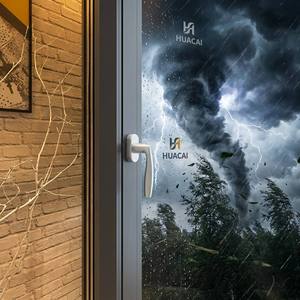
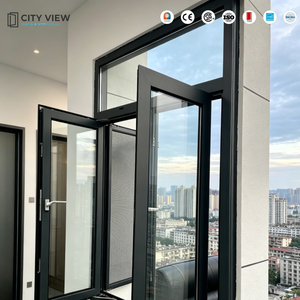
Grade 5 Acoustic HUACAI Soundproof Residential Aluminum System Window Grade 5 Acoustic Insulation Tilt & Turn Window

HUACAI Soundproof Residential Aluminum System Window Grade 5 Acoustic Insulation Tilt & Turn Window

Tilt & Turn Grade 5 Acoustic Thermal Break
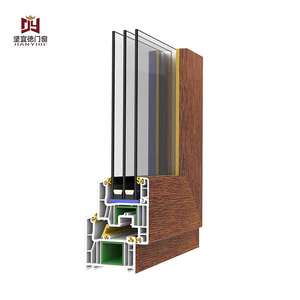
CE Certified UPVC Casement Windows Double Glazed For Villa Residential Projects Custom Size OEM ODM Manufacturer CE Certified Noise Reduction

UPVC Casement Windows Double Glazed For Villa Residential Projects Custom Size OEM ODM Manufacturer CE Certified Noise Reduction

UPVC System Double Glazed CE Certified
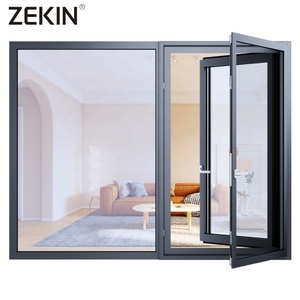
AS2047 & NFRC Customized Slim Narrow Frame Casement Window AS2047 NFRC Certification Hurricane Proof Sound Insulated Aluminum Windows

Customized Slim Narrow Frame Casement Window AS2047 NFRC Certification Hurricane Proof Sound Insulated Aluminum Windows

Slim Sightline Hurricane Proof AS2047 Standard
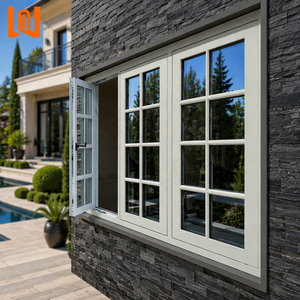
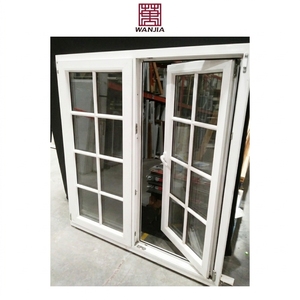
Vinyl French European Modern Exterior Double Glass White Vinyl Commercial French Window Villas Magnetic Screen Pvc Casement windows

European Modern Exterior Double Glass White Vinyl Commercial French Window Villas Magnetic Screen Pvc Casement windows

French Style Magnetic Screen Vinyl Frame
Low-E Sliding Double Glazed Low E Glass Soundproof Exterior Patio Aluminum Australia up Down Sliding Door Standard Windows and Doors Black

Double Glazed Low E Glass Soundproof Exterior Patio Aluminum Australia up Down Sliding Door Standard Windows and Doors Black

Low-E Glass Vert. Sliding Australia Std
Double Glazed CE AS2047 SAMPLE windows Modern Soundproof Hurricane Proof Aluminum Alloy Framed French Double Glazed Casement windows

CE AS2047 SAMPLE windows Modern Soundproof Hurricane Proof Aluminum Alloy Framed French Double Glazed Casement windows

Impact Rated Alloy Frame CE / AS2047
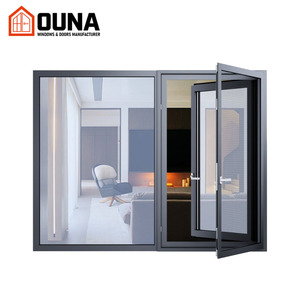
NFRC Energy OUNA NFRC Soundproof Double Glazed Insulated Aluminium Glass Casement windows Design Impact Energy Efficiency Aluminum Window

OUNA NFRC Soundproof Double Glazed Insulated Aluminium Glass Casement windows Design Impact Energy Efficiency Aluminum Window

NFRC Listed Energy Saving Insulated Unit
Modern Grid Modern Grid Design Upvc Casement Window Sound Insulation Tempered Glass Louver Curtains Vinyl windows For Villas

Modern Grid Design Upvc Casement Window Sound Insulation Tempered Glass Louver Curtains Vinyl windows For Villas

Louver Curtain Tempered Glass Grid Aesthetics
48 dB+
Acoustic Reduction Index (Rw)
12+ Years
OEM Manufacturing & Exporting
100% Custom
Extrusion & Tooling Precision
ISO/AS2047
Global Structural Compliance
Acoustic Physics & Material Science

The Physics of Acoustic Decibel Mitigation in Architectural Fenestration

Information Gain Note: True sound isolation cannot be achieved by double glazing alone; it requires frequency-targeted mass damping, asymmetric glass thickness ratios, and continuous perimeter elastomeric compression sealing.

Modern architectural acoustic engineering distinguishes sharply between standard thermal insulation and high-STC (Sound Transmission Class) acoustic attenuation. In urban, highway, and airport proximity environments, environmental noise spans low-frequency mechanical rumblings (50 Hz – 250 Hz) to high-frequency aerodynamic and human vocal noise (1000 Hz – 4000 Hz). Standard monolithic glass or basic double-glazed units exhibit a critical weakness known as the coincidence dip—where specific acoustic wavelengths match the natural bending frequency of the glass pane, allowing sound energy to pass straight through.

As a senior OEM/ODM manufacturer, our engineering lab overcomes coincidence dips by specifying Asymmetric Laminated Glass Configuration coupled with viscoelastic PVB/SGP interlayers. By combining panes of dissimilar mass (e.g., 8mm exterior toughened glass + 12A Argon Gap + 6.38mm interior acoustic laminated glass), the natural resonant frequencies are disrupted, preventing coincidence resonance and dampening acoustic transmission by up to 48 dB (Rw + Ctr rating).

Glazing Specification Overall Thickness STC Rating (dB) Rw (C; Ctr) dB Rating Primary Target Noise Profile
Single Monolithic 6mm Tempered 6 mm 31 dB 31 (-1; -2) Basic light urban noise
Standard Double Glazed (6+12A+6) 24 mm 35 dB 35 (-2; -5) Suburban traffic & ambient noise
Asymmetric Thermal Break (8+12A+6) 26 mm 39 dB 38 (-1; -4) Medium traffic & urban commercial
Acoustic Laminated Double (6+12A+8.76 Acoustic PVB) 26.76 mm 44 dB 43 (-2; -6) Highways, heavy traffic & urban core
Triple Glazed Multi-Chamber Laminated (8.76 PVB + 12A + 6 + 12A + 6.38) 41.14 mm 49 dB 48 (-2; -7) Airport runways, rail lines & night clubs
Enterprise OEM & ODM Manufacturing

Precision Extrusion, Multi-Chamber Thermal Breaks & Custom Tooling

Our state-of-the-art manufacturing facility combines high-tensile 6063-T6 aluminum alloy profiles, automated CNC machining, and multi-chamber polyamide (PA66GF25) thermal barriers to eliminate structural thermal bridging while maximizing acoustic dampening.

Multi-Chamber Aluminum Profile Metallurgy

We extrude 6063-T6 architectural grade aluminum profiles engineered with up to 5 discrete internal chambers. Air cavities inside the aluminum profile are filled with high-density expandable polyurethane foam, reducing internal acoustic standing waves within the window frame itself.

Continuous EPDM Triplex Compression Gaskets

Acoustic leaks occur wherever air passes. Our custom OEM designs integrate three continuous perimeter seal lines made of automotive-grade EPDM rubber (Ethylene Propylene Diene Monomer), achieving air permeability performance under Class 4 (EN 12207) and wind pressure up to Class C5 (EN 12210).

Heavy-Duty German Hardware & Multi-Point Locking

Acoustic insulation relies heavily on mechanical seal compression. We equip our casement and tilt-and-turn OEM windows with multi-point perimeter locking gear drives (SIEGENIA / ROTO hardware), ensuring uniform compression pressure along all four frame edges when closed.

Industry Intelligence

Future Procurement Trends for Acoustic & Architectural Windows (2025–2030)

Global architectural procurement is undergoing a paradigm shift driven by decarbonization mandates, stricter urban noise pollution regulations, and the rapid adoption of high-performance prefabricated building envelopes.

1. Ultra-Narrow Sightlines Combined with Vacuum Insulated Glazing (VIG)

Developers are no longer willing to sacrifice modern minimalism for acoustic performance. Procurement is rapidly shifting toward ultra-slim aluminum profiles (sightlines as narrow as 18mm to 25mm) integrated with Vacuum Insulated Glazing (VIG). VIG technology replaces gas gaps with a 0.3mm vacuum chamber, yielding sound insulation ratings above 42 dB in a profile less than half the thickness of traditional triple glazing.

2. Mandatory LEED v4.1 & BREEAM Decarbonization Compliance

Global B2B procurement contracts now mandate Environmental Product Declarations (EPD) and Low Carbon Aluminum certification (recycled scrap content exceeding 75% or primary smelting powered by hydropower). OEM exporters must provide verifiable U-factor calculations (< 1.1 W/m²K) and Solar Heat Gain Coefficients (SHGC) to help commercial projects satisfy LEED Energy & Atmosphere credits.

3. Smart Acoustic Seals & Active Micro-Ventilation Systems

Airborne sound insulation traditionally required windows to remain completely sealed. Future procurement trends focus on integrated micro-ventilation channels featuring acoustic baffling and electrostatic PM2.5 filters. These systems allow continuous fresh air exchange while maintaining an acoustic attenuation rating above 38 dB.

4. Modular Prefabrication & Unitized Facade Integration

To reduce on-site installation labor costs and snagging issues, main contractors increasingly mandate off-site modular factory assembly. Window systems are prefabricated as complete unitized modules with pre-installed acoustic flashings, structural anchors, and interior finished sub-frames prior to global containerized freight export.

Material Innovation Whitepaper

Evolution of Window Frame Metallurgy & Interlayer Chemistry

A technical comparison of legacy window technologies against next-generation OEM materials engineered for extreme sound environments and tropical/coastal weathering.

Interlayer Polymer Science: Acoustic PVB vs Standard EVA

Standard polyvinyl butyral (PVB) interlayers offer structural safety but limited damping for low-frequency sound. Next-generation Acoustic PVB (A-PVB) incorporates a tri-layer resin structure with a soft viscoelastic core sandwiched between two rigid PVB skins. This specialized core converts acoustic vibration energy into harmless micro-thermal energy, increasing dampening effectiveness between 100 Hz and 500 Hz by up to 6 dB over standard PVB.

Profile Metallurgy: 6063-T6 Aluminum vs High-Impact UPVC

While UPVC offers inherently low thermal conductivity, high-rise architectural projects require the structural modulus and wind-load resistance of 6063-T6 extrusions. By combining structural aluminum frames with high-density Polyamide (PA66GF25) thermal breaks reinforced with 25% glass fiber, modern aluminum windows deliver structural wind resistance up to 5000 Pa while matching UPVC thermal performance.

Manufacturing Powerhouse

Why Global Buyers Choose Our OEM/ODM Manufacturing Infrastructure

Combining over 12 years of specialized architectural glazing experience, our in-house factory facility delivers end-to-end production control—from aluminum extrusion machining and powder coating to structural assembly and certified acoustic testing.

Full In-House Fabrication Facility

All cutting, CNC milling, corner crimping, gasketing, and double-glazed assembly are executed under one roof at our specialized manufacturing facility (Industrial Area, Al Sajaa shed infrastructure). Tight engineering tolerances eliminate site-fitting adjustments and guarantee batch consistency.

Global Certification & Standard Compliance

Our OEM product lines are fully tested and compliant with major international fenestration standards, including AS2047 (Australian Standard for Windows), NFRC (National Fenestration Rating Council), and CE Certification for European commercial building codes.

Containerized Export & Packaging Protocol

We export to over 45 countries worldwide. Every frame undergoes protective film masking, corner plastic shielding, non-contact wooden crate packing, and desiccant-equipped export container loading to ensure 0% breakage during ocean transit.

Buyer Guidance & FAQ

Procurement & Engineering Frequently Asked Questions

Comprehensive technical guidance for architects, procurement directors, façade consultants, and general contractors seeking OEM soundproof window solutions.

Q1: What is the maximum Sound Transmission Class (STC) rating achievable with your custom OEM aluminum window systems?
Our highest-performing custom OEM windows reach up to STC 48 / Rw 48 dB. This performance level is achieved using a dual-frame double-window configuration or a multi-chamber thermal break aluminum profile fitted with an asymmetric triple-glazed sound-control insulated unit (e.g., 8.76mm Acoustic PVB Laminated + 12A Argon + 6mm Tempered + 12A Argon + 6.38mm Laminated).
Q2: How do you verify compliance with AS2047, NFRC, and CE testing requirements for commercial project submittals?
We provide full technical submittal packages prior to production, including certified test reports from accredited third-party laboratories (such as Intertek or SGS). Submittal packages include structural wind pressure calculations (AS4055 / AS2047 up to N6/C4 wind ratings), U-factor and SHGC performance modeling (NFRC standards), air infiltration ratings, and water penetration resistance data (up to 600 Pa).
Q3: What customization options are available for OEM / ODM profile tooling and extrusion design?
We offer end-to-end OEM customization. Buyers can submit architectural CAD / BIM drawings, and our die-making facility will machine custom extrusion molds within 12 to 15 days. Customization covers wall thickness (1.4mm to 3.0mm), thermal break polyamide widths (14.8mm to 34mm), anodized finishes, fluorocarbon (PVDF) spray coatings, RAL color powder coating, and wood-grain heat transfer sublimation.
Q4: Why are asymmetric glass configurations recommended over standard symmetrical double glazing for acoustic control?
When two glass panes have identical thicknesses (e.g., 6mm + 6mm), they vibrate at identical resonance frequencies, allowing sound waves at that frequency to pass through with minimal resistance (the coincidence effect). By pairing unequal masses (e.g., 8mm + 6mm or 10mm + 6.38mm), each pane dampens the sound frequencies that the other pane transmits, flattening the frequency response curve and yielding a significantly higher Rw acoustic rating.
Q5: How do your soundproof window profiles withstand harsh coastal environments and high heat (50°C+)?
All our structural aluminum profiles use 6063-T6 aluminum alloy treated with Qualicoat-certified powder coating or 25-micron hard anodizing. This prevents salt-spray corrosion, surface chalking, and UV degradation. Polyamide PA66GF25 thermal breaks maintain mechanical shear strength at operating temperatures exceeding 90°C, preventing frame warping or seal failure under solar expansion.
Q6: What is the typical manufacturing lead time for bulk wholesale orders and project container shipments?
Standard production lead time for sample approval or trial shipments is 10 to 14 days. Full container orders (20ft / 40ft HQ) are fabricated and quality-inspected within 25 to 30 days after shop drawing approval. For ongoing contract supply, we maintain rolling buffer stock of raw aluminum profiles to enable 15-day expedited manufacturing runs.
Q7: How do you guarantee weatherproofing and water tightness around casement and tilt-and-turn operating sashes?
We utilize a multi-barrier defense system consisting of three continuous EPDM gaskets: an outer rain-screen seal, a central acoustic/thermal compression gasket, and an inner air seal. Frame corners are joined using cast-aluminum corner cleats injected with two-part epoxy sealant, preventing joint leakage even under severe hurricane-force driving rain.
Q8: Can your factory produce integrated louver blinds inside double-glazed units for privacy and sound isolation?
Yes. We manufacture magnetic and motorized integral blind systems sealed inside hermetically dust-free insulated glass units (27A gap). The blinds operate via external magnetic slides or wireless smart home motor controls, providing light control without disrupting the acoustic or thermal seal of the insulated glass unit.

Partner With A Factory Direct Exporter

Ready to Elevate Your Architectural Acoustic Specifications?

Get in touch with our engineering team today for technical shop drawings, acoustic test submittals, OEM profile tooling consultations, and direct wholesale factory quotes.