
Engineered for high-load residential, commercial, and hospitality projects. ISO 9001 & EN 14428 Certified.
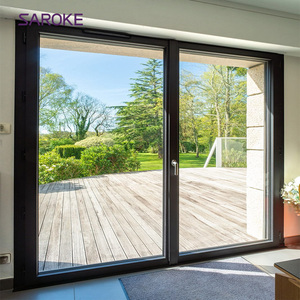
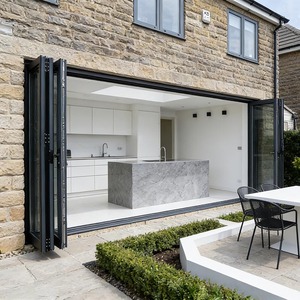
Information gain breakdown on shear stress, wind load dynamics, and alloy extrusion metallurgy.
In modern architectural engineering, Custom OEM Glass Railings have transitioned from purely decorative perimeter barriers into critical structural elements. Modern architectural codes (such as ASTM E935/E985, BS 6180:2011, and EN 1991-1-1) demand that glass railing assemblies absorb significant horizontal linear loads—often exceeding 1.5 kN/m to 3.0 kN/m in public assembly spaces and coastal high-rises—without relying on top frame supports.
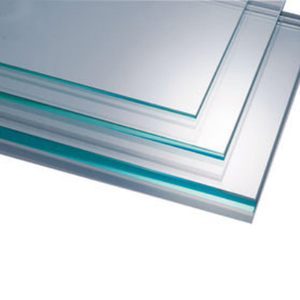
Achieving this level of rigidity requires a holistic engineering approach combining structural laminated tempered glass with high-yield strength aluminum alloy mounting shoe profiles (6063-T6 or 6061-T6 temper). OEM manufacturing facilities must enforce sub-millimeter tolerances during extrusion, CNC machining, and tempering processes to eliminate localized stress concentrations that lead to spontaneous glass breakage.
When engineering frameless balustrades for export, glass composition is paramount. Standard Polyvinyl Butyral (PVB) interlayers, while sufficient for low-rise interior partitions, demonstrate stiffness degradation under elevated temperatures and prolonged humidity exposure. For high-performance exterior applications, SGP (SentryGlas® Plus) ionoplast interlayers provide up to 5 times the tear strength and 100 times the stiffness of conventional PVB.
Comparative structural analysis for architects, developers, and facade contractors.
| System Architecture | Aluminum Base Alloy | Recommended Glass Spec | Max Load Capacity | Primary Application Scenario |
|---|---|---|---|---|
| Continuous Bottom Shoe Channel | 6063-T6 Structural Aluminum | 12mm / 15mm Monolithic or 8+8 / 10+10 SGP Laminated | 3.0 kN/m (BS 6180 Compliant) | High-Rise Balconies, Airports, Commercial Arenas |
| Heavy-Duty Stainless Spigots | Duplex 2205 / 316L Stainless Steel | 12mm to 17.52mm Tempered Laminated | 1.5 kN/m to 2.0 kN/m | Villa Swimming Pool Enclosures, Garden Terraces |
| Standoff Pin Mounts (Side Fix) | Solid Machined SS316 Anchor Bolts | 10+10mm SGP Tempered Laminated | 1.5 kN/m | Open Staircases, Atrium Voids, Internal Mezzanines |
| Top Rail Cap / Slot Channel | 6063-T5 Anodized Aluminum / SS316 Tube | 8mm+8mm or 10mm+10mm PVB/SGP | 2.5 kN/m | Public Footbridges, Shopping Mall Atriums |
Operating from our integrated manufacturing hub in Al Sajaa Industrial Area (Sharjah), serving global markets across the UAE, Middle East, Europe, and Americas.
Our workshop houses high-precision CNC machining centers capable of milling, drilling, and cutting continuous aluminum base shoes up to 6 meters in single lengths, maintaining strict ±0.2mm dimensional tolerances.
Finishing options include QUALICOAT-certified architectural powder coating, anodizing up to 25 microns for extreme marine resistance, and wood-grain sublimation matching project aesthetic specifications.
We provide full structural engineering calculations, AutoCAD shop drawings, and 3D BIM models for consultant approval prior to bulk manufacturing, ensuring seamless integration on site.
Strategic analysis of decarbonization, prefabricated modularity, and smart material integration.
Global real estate developers and general contractors are enforcing stringent ESG (Environmental, Social, and Governance) purchasing mandates. By 2026, over 65% of international glass railing procurements will require Environmental Product Declarations (EPDs). OEM factories are shifting to primary aluminum smelted using renewable energy (hydro or solar) and utilizing up to 75% post-consumer recycled aluminum content, reducing embodied carbon by more than 60% compared to traditional smelting.
On-site labor cost inflation and project scheduling pressure are driving demand for "plug-and-play" balustrade hardware. Future OEM railing systems feature dry-glazing expansion wedge mechanisms that allow glass alignment from the interior side of the balcony. This eliminates the need for expensive exterior scaffolding or crane platforms, reducing installation time per linear meter by up to 40%.
Balconies and building parapets represent vast unutilized surface area on commercial facades. The integration of Building-Integrated Photovoltaics (BIPV) into laminated glass railings enables balustrades to generate clean solar power while maintaining structural barrier safety. Semi-transparent Cadmium Telluride (CdTe) or crystalline silicon solar cells embedded within SGP laminated glass are expected to capture significant market share in high-rise residential developments worldwide.
Detailed engineering answers written by senior facade specialists for contractors and project managers.
Our glass railing systems are engineered and tested to comply with major international building codes, including BS 6180:2011 (UK standard for barriers in and about buildings), ASTM E935 / E985 (US structural performance standards for permanent metal railing systems and glass balustrades), EN 1991-1-1 Eurocode 1, and AS/NZS 1170.2 (Australian wind action standard). Test certificates for linear line load performance up to 3.0 kN/m are available upon request.
Direct factory procurement eliminates middleman markups while granting developers complete control over extrusions, finishes, and glass specifications. Operating from our Al Sajaa (Sharjah) workshop allows us to combine raw European profile technology with high-volume, cost-effective fabrication. Furthermore, our strategic proximity to major UAE sea ports (Jebel Ali, Port Khalid) guarantees rapid export shipping schedules to global destinations.
For coastal and marine environments (within 5 km of seawater), we mandate high-grade 6063-T6 or 6061-T6 structural aluminum subjected to pre-treatment chromating or non-chrome zirconium conversion, followed by a minimum 25-micron class 2 anodizing layer or a 60–80 micron QUALICOAT-approved fluoropolymer (PVDF) powder coating. Fixing anchors are strictly specified as Duplex 2205 or A4-80 (316) stainless steel with isolation gaskets to prevent galvanic corrosion.
Standard profile series maintain an MOQ as low as 50 linear meters. For custom extrusion dies or unique profile geometries, the typical extrusion tooling lead time is 7 to 10 days. Mass production of fabricated aluminum base shoes and tempered laminated glass panels averages 2 to 4 weeks depending on total volume, with batch-tested QC inspections before container loading.
Export glass shipments are packed in heavy-duty fully enclosed fumigated wooden crates or steel A-frames. Individual glass sheets are separated by cork pads or inter-layer anti-fungal powder, with corners protected by high-density polyethylene caps. Crates are desiccated and vacuum-wrapped to eliminate condensation damage during transoceanic transit.
Connect with our structural engineering and export department today. Send us your architectural drawings, bill of quantities (BOQ), or profile specifications for a rapid quote within 24 hours.