Explore our certified range of high-impact storm windows, thermally insulated folding systems, structural glass doors, and heavy-duty tempered glass solutions manufactured for global commercial and residential projects.
In the contemporary landscape of global fenestration engineering, architectural specifications demand an unprecedented balance between extreme structural resilience, thermal efficiency, and cost optimization. Global climate volatility, strict regional building codes (such as Florida’s High-Velocity Hurricane Zone regulations and Australia’s AS2047 certification), and soaring energy costs have transformed storm windows and heavy-duty glazed doors from localized building components into highly engineered structural envelopes.
China has established itself as the world’s foremost manufacturing hub for architectural aluminum extrusions, high-performance Insulated Glass Units (IGU), and advanced storm fenestration systems. By combining state-of-the-art CNC machining, fully automated anodizing and powder-coating lines, and strategic access to high-purity 6063-T6 aluminum alloys, top Chinese factories deliver products that meet or exceed European and North American quality standards at scalable economies of scale.
Storm windows engineered for extreme coastal zones or high-rise structures require rigorous validation under ASTM E1886 and ASTM E1996 impact standards, as well as AAMA/WDMA/CSA 101/I.S.2/A440 benchmarks. Premier Chinese manufacturing facilities leverage advanced finite element analysis (FEA) to design heavy-wall aluminum frames with reinforced internal chambers. These extrusions accommodate multi-point locking systems capable of distributing localized wind pressures (exceeding Design Pressure 50 to DP100 ratings) evenly across the perimeter anchors.
Legacy aluminum storm frames suffered from thermal bridging, leading to severe condensation and heat gain/loss. Top Chinese factories utilize techno-structurally isolated thermal break systems incorporating 25% glass-fiber reinforced Polyamide (PA66GF25) strips. When paired with Argon-filled Low-E double or triple-glazed units, these systems lower U-factors down to 0.22 BTU/h·ft²·°F (approx. 1.25 W/m²K), dramatically reducing cooling and heating loads for commercial projects and luxury villas alike.
A comparative structural and thermal breakdown engineered for procurement directors, façade consultants, and general contractors.
| Performance Parameter | Standard Commercial Windows | China Top Manufacturer Storm Systems | Engineering Compliance Standard |
|---|---|---|---|
| Profile Alloy & Temper | Recycled / Standard 6063-T5 (1.2mm) | Primary Virgin 6063-T6 Structural Aluminum (2.0mm - 3.0mm) | GB/T 5237 / ASTM B221 |
| Wind Load / Design Pressure | DP25 - DP35 (120 km/h) | DP50 - DP100+ (Up to 300 km/h Hurricane Resistance) | ASTM E1886 / ASTM E1996 / AS1288 |
| Glass Configuration | Single 5mm / Double 5+6A+5 Float | 5mm+1.52PVB/SGP+5mm Laminated / Triple Low-E Insulated | IGCC / SGCC / EN 12150 |
| Thermal Insulation (U-Factor) | > 3.5 W/m²K (High Energy Loss) | 1.1 W/m²K - 1.6 W/m²K (Polyamide PA66GF25 Break) | NFRC 100/200 / ISO 10077 |
| Acoustic Isolation (STC) | STC 25 - 28 dB | STC 42 - 48 dB (Side-Compression Gasket Seals) | ASTM E90 / ISO 140-3 |
| Corrosion Resistance | Basic Powder Coat (< 5 Years) | 25-Year Qualicoat Class 2 / PVDF Fluorocarbon Coating | AAMA 2605 / ISO 9227 Salt Spray |
The global trade landscape for structural glazing is undergoing rapid technological convergence. B2B buyers—ranging from multi-family project developers in North America to resort builders in coastal GCC regions—are moving away from transactional off-the-shelf buying. Instead, the focus has shifted toward strategic OEM/ODM partnerships with certified Chinese mega-factories capable of delivering fully documented, turn-key fenestration packages.
To combat rising job-site labor costs globally, Chinese manufacturers are prioritizing modular pre-assembly. Complete window walls, accordion bi-fold systems, and unitized storm curtain systems are fully assembled, sealed with structural silicone (Dow Corning / Sika), and hardware-tested on factory floors prior to crate packing. This reduces field installation errors by up to 65% and ensures air infiltration tightness under ASTM E283 testing.
While traditional laminated glass relies on Polyvinyl Butyral (PVB) interlayers, future storm window procurement heavily favors SentryGlas® (SGP) ionoplast technology. SGP interlayers are 5 times tougher and up to 100 times stiffer than conventional PVB materials. In the event of glass breakage during extreme storm conditions, the glass remains upright in its aluminum frame, preventing envelope breach and wind-borne water ingress.
Top Chinese factories are actively decarbonizing their supply chains. By utilizing hydro-electric powered primary aluminum smelting and adopting solvent-free powder coatings, leading manufacturers now issue verified EPD certificates. This documentation enables international developers to satisfy LEED v4.1 and BREEAM sustainability ratings while lowering embodied carbon metrics.
Combining decades of precision engineering expertise, rigorous quality control, and scalable production to serve global architectural projects.
We operate full in-house extrusion die manufacturing and multi-axis CNC machining workshops. This allows custom profile development within 10–14 days, accommodating non-standard architectural sightlines, deep glazing pockets, and heavy commercial mullion requirements.
Every product line undergoes rigorous third-party physical testing. Our storm window and sliding door systems carry active certifications for North American, Australian, and European regulatory environments.
Fragile glazing systems require bulletproof export packaging. Our export packaging utilizes fully enclosed plywood crates, steel transport A-frames, and moisture-absorbing vapor barriers to eliminate damage during long ocean transit.
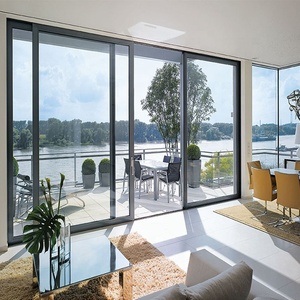
Modern architectural design emphasizes maximum daylighting, leading to expansive floor-to-ceiling glass openings. However, unengineered large glass expanses often present acoustic leaks, solar heat build-up, and structural deflection under high wind loads. Leading Chinese fenestration developers are introducing targeted product solutions to overcome these challenges:
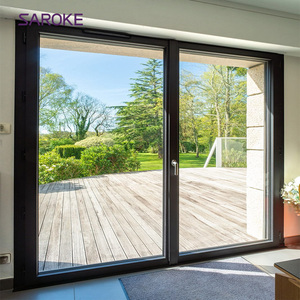
Traditional sliding doors suffer from air leakage around brush weatherstrips. Next-generation soundproof sliding systems (such as our Sound Proof Interior Side Compression Aluminum Glass Sliding Door) feature specialized lever hardware that draws the sash horizontally into EPDM compression seals upon closure. This structural mechanical seal achieves acoustic isolation levels above STC 45 dB, making it ideal for urban high-rises and luxury hotel suites.
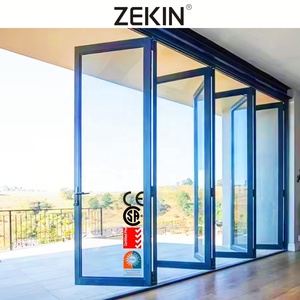
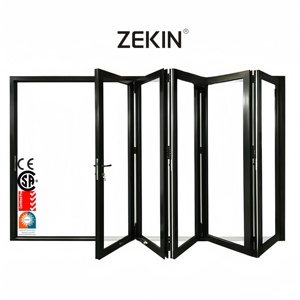
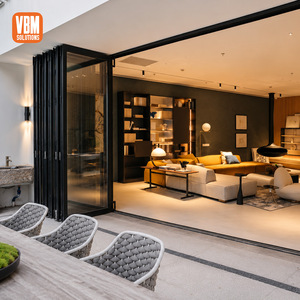
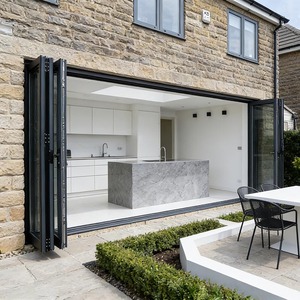
In luxury residential construction, seamless indoor-outdoor transitions require folding walls spanning up to 12 meters wide. Advanced factory engineering utilizes top-hung stainless steel tandem roller carriages capable of supporting panel weights exceeding 300 kg each. Paired with thermally broken frame profiles, these bi-fold doors maintain effortless single-hand glide operation while complying with stringent air and water penetration limits under ASTM E331.
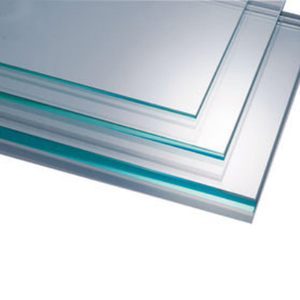
The core safety element of any storm fenestration system lies in glass technology. Industrial flat-top horizontal tempering furnaces produce safety glass ranging from 6mm to 15mm with minimal optical distortion (< 0.05mm roller wave). For specialized commercial application, HST (Heat Soak Testing) is applied to eliminate spontaneous breakage caused by Nickel Sulfide (NiS) inclusions.
Expert answers addressing hardware specs, lead times, climate adaptation, and verification guidelines for commercial procurement.
Top-tier Chinese manufacturers engineer profiles specifically for impact resistance and submit complete window assemblies to independent accredited testing laboratories (such as Intertek or CSA). Testing includes air infiltration (ASTM E283), water resistance (ASTM E331), structural performance (ASTM E330), and large missile impact testing (ASTM E1886/E1996). Test reports and structural engineering calculations are supplied directly with project submittal packages.
PVB (Polyvinyl Butyral) is standard for safety glazing and auto glass. However, SGP (Ionoplast) interlayers are 5 times tougher and up to 100 times stiffer than PVB. In high-wind storm scenarios where glass may fracture due to severe impact, an SGP laminate maintains structural rigidity within the aluminum frame, preventing blow-outs and wind-driven rain penetration.
For custom architectural profiles, die design and tooling fabrication typically take 10 to 14 days. Sample profile extrusions, surface powder-coating/anodizing, and thermal break assembly require an additional 5 to 7 days. Once shop drawings are signed off, complete production batches generally ship within 25 to 35 days.
For high-temperature environments (such as the Middle East, GCC, or coastal regions), profiles feature PA66GF25 polyamide thermal insulation strips that eliminate conductive heat gain. Surface treatments utilize Qualicoat Class 2 architectural powder coating or PVDF (Fluorocarbon) finishes, tested against 3,000+ hours of continuous neutral salt spray (ASTM B117) to prevent oxidation, blistering, or chalking.
Yes. OEM factories routinely manage large-scale multi-phase developments. Orders are produced in synchronized batches according to opening schedules, packaged by floor or building block, and dispatched in phased container shipments to align with general contractor construction milestones.
Factories offer flexibility depending on specification budgets. Options include premium European hardware lines (CMECH, Hoppe, Siegenia, G-U, Sobinco) as well as top-tier domestic multi-point locking hardware (Kin Long, Chuang) engineered for heavy panel weights and cycle durability exceeding 50,000 open/close operations.
Request comprehensive factory technical catalogs, structural test reports, or submit your architectural BOQ/drawings for a complimentary factory-direct quote.
Send an Inquiry