Direct factory export of heavy-duty aluminum frames, acoustic double-glazed patio systems, and custom tempered glass shower partitions manufactured to international building standards.
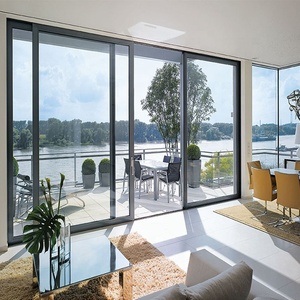
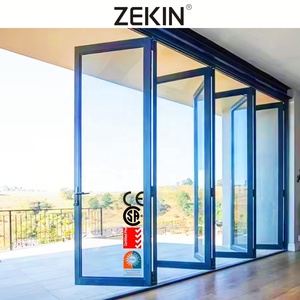
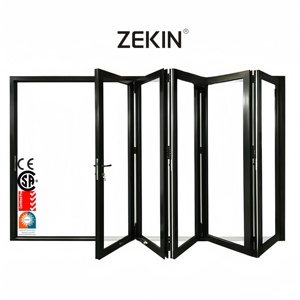
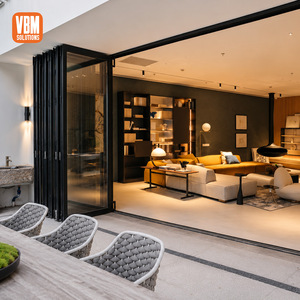
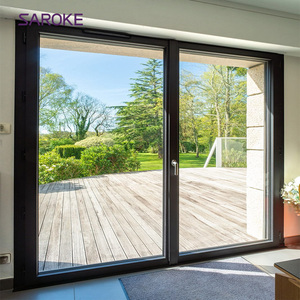
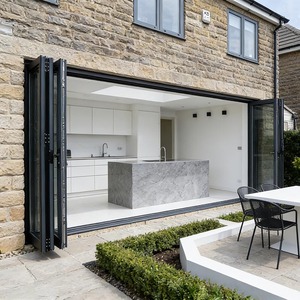
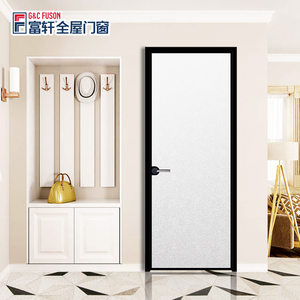
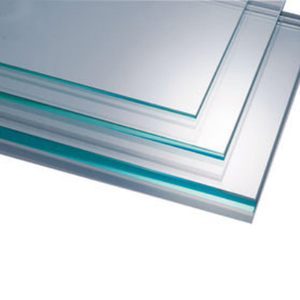
Why leading global developers, architects, and hardware wholesalers partner directly with our specialized production facilities in China.
In the highly competitive commercial and residential fenestration industry, selecting a premier China top shower doors manufacturer and factory is a critical strategic decision. Modern architectural standards require more than basic glass cutting; they demand structural rigor, acoustic damping, thermal isolation, and uncompromising safety certifications. With over 12 years of hands-on manufacturing expertise, our integrated production hub bridges advanced metallurgical extrusion with thermal glass processing under one roof.
Unlike trading intermediaries that outsource assembly to disparate workshops, our vertically integrated facility executes every phase of production in-house—from 6063-T5 aluminum billet extrusion, automated CNC machining, and surface anodizing, to high-pressure glass tempering, edge polishing, and hardware torque testing. This unified operational structure guarantees tight dimensional tolerances (±0.5mm), eliminates third-party markups, and provides complete traceability across every batch shipped to North America, Europe, the Middle East, and Australia.
Our factory utilizes 5-axis German CNC milling centers to execute precise hardware cutouts, hinge recesses, and drainage slots into heavy-gauge aluminum profiles without compromising structural integrity.
Every glass panel (6mm to 15mm) undergoes horizontal convection tempering, yielding a fragment particle count exceeding 40 particles per 50x50mm square, satisfying ANSI Z97.1 and EN 12150 safety standards.
Architectural hardware and extrusions receive Physical Vapor Deposition (PVD) or 25-micron AkzoNobel powder coatings, passing 480-hour neutral salt spray (NSS) testing against severe moisture corrosion.
Key evolutionary shifts shaping commercial purchasing, specification criteria, and supply chain strategies through 2025–2030.
The global architectural glass and enclosure market is undergoing a seismic transformation driven by stringent energy efficiency building codes, modern aesthetic preferences, and dynamic supply chain mandates. Commercial developers, hotel procurement groups, and residential construction contractors must align their sourcing strategies with three primary technical vectors:
Modern luxury architecture heavily favors unobstructed visual lines. Procurement inquiries for ultra-slim profile aluminum glass sliding doors and frameless glass shower enclosures have grown over 45% year-over-year. Achieving structural stability with minimal aluminum exposure requires factories to utilize higher-density alloys (6063-T6 or 6005-T6) and advanced structural silicone bonding (Dow Corning 995) to distribute wind-load and impact stresses across the glass panel.
Institutional buyers in Western markets now require Environmental Product Declarations (EPD) and raw material carbon footprint tracking. Leading Chinese factories are responding by adopting green electricity in aluminum smelting and implementing 100% closed-loop water filtration systems during glass grinding and washing. Sourcing from certified ESG-compliant facilities mitigates compliance friction at destination customs.
On-site construction labor costs continue to rise exponentially across North America, Europe, and Australia. The global market is rapidly shifting toward modular "Plug-and-Play" glazing kits. OEM factories that provide pre-drilled glass, pre-installed weather-stripping, and modular snap-lock aluminum extrusions allow contractors to reduce on-site installation time by up to 60%, drastically cutting overall project budgets.
How next-generation material science is revolutionizing shower doors and architectural door systems.
Permanent polymeric nano-coatings fused during heat tempering create an oleophobic surface that repels water spots, mineral scale, and soap scum, eliminating the need for harsh chemical cleaning.
By bonding ultra-clear EVA or SGP interlayers between tempered glass panes, spontaneous nickel-sulfide (NiS) breakages no longer cause glass shattering, retaining 100% panel cohesion for maximum user safety.
Polymer Dispersed Liquid Crystal (PDLC) technology enables shower doors and partition systems to switch instantly from transparent to frosted opaque via wall switch, smartphone app, or hotel automation control.
Incorporating glass-fiber reinforced polyamide (PA66) thermal barrier strips inside multi-chamber aluminum extrusions prevents thermal bridge heat transfer, drastically reducing interior AC loads.
Direct technical responses addressing common procurement, quality control, compliance, and shipping queries.
For global compliance, you must ensure the manufacturer holds validated safety certificates tailored to your region. For the US and Canada, demand SGCC (Safety Glass Certification Council) certification adhering to ANSI Z97.1-2015. For European markets, verify CE marking under EN 12150-1 (thermally toughened safety glass). For Australia and New Zealand, insist on AS/NZS 2208 compliance. Additionally, factory management should be certified under ISO 9001:2015 to guarantee consistent quality management.
Spontaneous breakage in tempered glass is primarily caused by Nickel Sulfide (NiS) inclusions in raw float glass. Our production protocol eliminates this risk through two measures: First, we exclusively source premium grade raw float glass from tier-1 manufacturers (CSG, PPG, or Jinjing) with ultra-low nickel impurities. Second, upon request, we conduct a Heat Soak Test (HST) according to EN 14179 inside specialized thermal chambers, which artificially induces premature failure in contaminated panes before they leave the factory floor.
We utilize high-grade 6063-T5 or 6063-T6 aluminum extrusions with wall thicknesses ranging between 1.5mm to 3.0mm, depending on wind load requirements. For shower enclosure hinges, brackets, and handles, we use forged SUS304 or SUS316 stainless steel or solid brass bodies. Avoid factories using cheap zinc alloys in wet bathroom environments, as zinc quickly corrodes, pitted, and snaps under dynamic door load stresses.
Our standard MOQ for stock aluminum profiles and standard glass sizes is 20 sets per model, or a combined 20-foot container load (~150–200 sets). For bespoke architectural project orders requiring custom extrusions or specialized PVD colors, MOQ is calculated based on profile tonnage (typically 500kg per custom profile die). Standard lead time is 15 to 25 working days following shop drawing approval and deposit receipt.
Export sea-freight safety requires rigorous packaging engineering. Every glass panel is edge-protected with rubber corner caps, separated by anti-friction cork pads or plastic spacers, wrapped in waterproof PE film, and encased in fully enclosed fumigation-free plywood crates or A-frame steel racks. This guarantees zero panel-to-panel contact and absorbs container shock during ocean transport and fork-lift unloading.
Yes. Over 70% of our production volume comprises custom OEM/ODM manufacturing. Our internal engineering department reviews your Auto CAD, SolidWorks, or Revit BIM files, performs structural load simulations, and produces detailed shop submittal drawings within 48 hours. We also offer 3D rapid plastic prototyping for custom handle and hinge concepts before opening steel extrusion dies.
Get direct factory wholesale pricing, instant engineering drawings, and complete OEM/ODM project support today.