China Top Aluminium Tubing Factories & Exporter

Technical Whitepaper & Engineering Guide on Industrial Aluminium Tubing, Architectural Extrusion Systems, Precision Metallurgical Tolerances & Global B2B Sourcing Strategies.

Premier Aluminium Profiles & Extrusion Products

Direct factory-engineered architectural and industrial aluminium profiles, thermal break window/door extrusions, and precision-drawn structural tubing manufactured to international ASTM, EN, and AS/NZS standards.
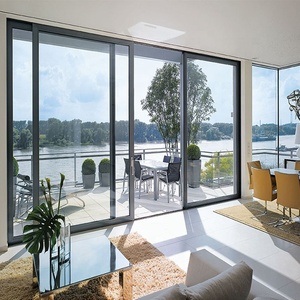
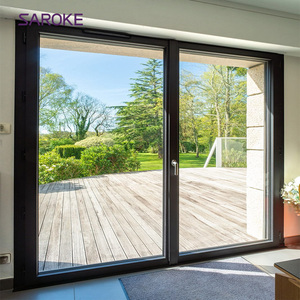
Residential Modern Soundproof Aluminum Alloy Glass Patio Sliding Door
Residential Soundproof Aluminum Patio Sliding Door System
  • Alloy Grade: 6063-T5 / T6
  • Glass Specs: 5mm+12A+5mm Double Glazed
  • Acoustic Rating: STC 38 dB
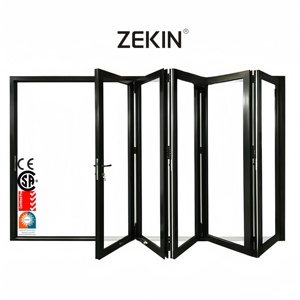
Folding Interior Door Factory Direct Sales Bi-Fold Doors
Multi-Panel Energy-Efficient Aluminum Bifold Glass Door Profile
  • Wall Thickness: 2.0mm Structural Profile
  • Surface Finish: AkzoNobel Powder Coat
  • Thermal Insulation: Polyamide PA66 Strip
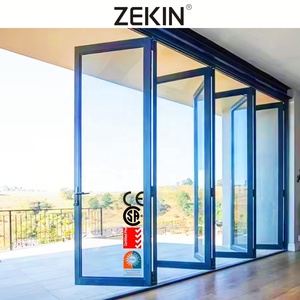
High Quality Aluminum Double Glass Energy Efficient Bi-fold Doors
Exterior Main Entrance NFRC AS2047 Certified Folding System
  • Certifications: AS2047, NFRC, CE
  • Wind Load: 4.5 kPa Structural Limit
  • Water Tightness: 600 Pa Rating
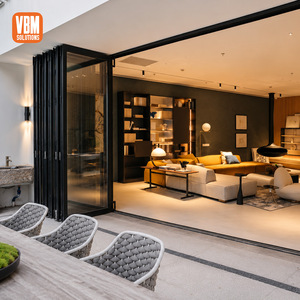
Large Opening Aluminum Accordion Glass Door
Large Opening Custom Aluminum Accordion Wall Profile System
  • Max Panel Height: Up to 4500mm
  • Track System: Heavy-Duty Stainless Steel
  • Hardware: German Siegenia / HOPPE
Sound Proof Interior Side Compression Aluminum Glass Sliding Door
Soundproof Interior Side-Compression Aluminum Glass Profile
  • Frame Depth: 80mm / 100mm Modular
  • Sealing: EPDM Triple Gasket System
  • Application: Commercial / Luxury Villa
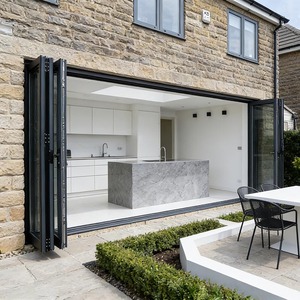
Modern Soundproof Waterproof Aluminum Folding Sliding Glass Patio Bi-Fold Door
Thermal Break Waterproof Aluminum Patio Bi-Fold Door Tubing
  • Thermal Transmittance: U-value < 1.6 W/m²K
  • Finish: PVDF / Fluorocarbon 25+ Yrs
  • Infill: Tempered Safety Glass
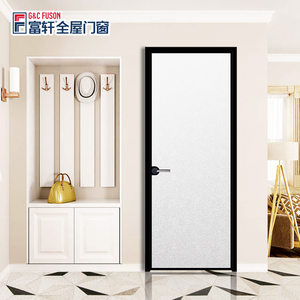
Hotel Room Glass Interior Casement Door With Lock
Precision Aluminum Framing Profiles for Commercial Casements
  • Machining: CNC Precision Milling ±0.05mm
  • Anodizing Film: 15-25 microns (AA15)
  • Fire Rating: Class A Non-Combustible
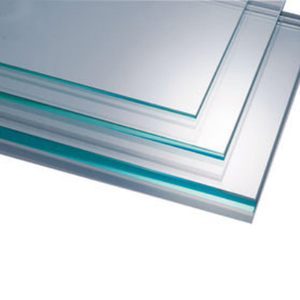
Industrial Flat Top Safety Clear Tempered Glass
Industrial Architectural Flat Top Safety Clear Tempered Glass
  • Thickness Range: 6mm, 8mm, 10mm, 12mm, 15mm
  • Impact Resistance: EN 12150-1 Standard
  • Edge Work: CNC Flat Polished / Beveled

China's Leading Manufacturing & Global Export Engineering

As an elite tier-1 China aluminium tubing factory and exporter, our integrated extrusion workshops operate sophisticated direct and indirect extruders ranging from 600 to 10,000 metric tons. We bridge metallurgical engineering precision with global logistics reliability.

120,000+
Metric Tons Annual Extrusion Capacity
12+
Years Industry Export Leadership
±0.05mm
Ultra-Tight CNC Machining Tolerance
85+
Countries & Territories Supplied

Advanced Extrusion Metallurgy

Our casting and homogenizing facilities utilize virgin A00 primary aluminium ingots combined with precision alloying elements (Mg, Si, Cu, Mn). We supply standardized and custom-formulated non-ferrous alloys including 6063, 6061, 6082, 6005A, and 7075, tempered to exact T4, T5, T6, or T651 structural states.

Comprehensive Surface Treatment

Featuring vertical and horizontal automated production lines for Anodizing (Qualanod certified), PVDF Fluorocarbon Spraying (AkzoNobel / PPG), Thermal Sublimation Wood Grain, and Electrophoresis Coating. Corrosion resistance guaranteed to withstand harsh coastal salt-spray conditions for up to 25+ years.

Certified Quality Control (E-E-A-T)

Every extrusion batch undergoes rigorous non-destructive testing, spectral analysis, eddy-current wall thickness checks, tensile mechanical testing, and dimensional inspection. Certified under ISO9001, ISO14001, IATF16949, AS2047, and Qualicoat Class 2 standardizations.

Technical Alloy Specification & Application Matrix

Understanding chemical compositions and mechanical limits is essential when selecting extruded aluminium tubing and structural profiles for industrial, aerospace, and architectural deployments.

Alloy Grade Temper Tensile Strength (MPa) Yield Strength (MPa) Elongation (%) Primary B2B Sourcing Applications
6063 T5 / T6 160 – 230 110 – 190 8 – 12% Architectural framing, window/door extrusions, seamless round/square tubing, curtain walls.
6061 T6 / T651 290 – 310 240 – 275 10 – 17% Heavy-duty structural components, marine structures, automotive frames, hydraulic tubing.
6082 T6 310 – 340 260 – 290 8 – 10% High-stress structural applications, bridges, cranes, roof trusses, transport industry profiles.
7075 T6 / T651 530 – 570 460 – 503 7 – 11% Aerospace fittings, defense equipment, high-performance precision instruments, gear shafts.

Future Procurement & Technological Trends in Aluminium Manufacturing

As global manufacturing shifts toward decarbonization, high-precision micro-extrusion, and automated supply chains, B2B sourcing managers must adapt to structural industry developments.

1. Shift Toward Low-Carbon & Recycled Aluminium (CBAM Compliance)

Driven by the European Union’s Carbon Border Adjustment Mechanism (CBAM) and global ESG imperatives, top Chinese aluminium exporters are integrating green hydro-powered smelters and closed-loop scrap recycling systems. Utilizing primary aluminium produced via renewable energy reduces carbon intensity from the industry average of 14kg CO2/kg Al down to under 4kg CO2/kg Al. Forward-thinking procurement buyers now mandate Environmental Product Declarations (EPD) during vendor qualification to mitigate future import tariff penalties.

2. Micro-Extrusion and Thin-Wall Precision Tubing

Advancements in high-pressure hydraulic extruders and computer-modeled die engineering allow Chinese mills to produce seamless drawn tubing with wall thicknesses down to 0.4mm while maintaining tensile integrity. Industries such as automotive heat exchangers (condensers and evaporators), 5G thermal dissipation modules, and medical devices are driving massive demand for ultra-precise micro-extruded multi-port aluminium profiles (MPE tubes).

3. High-Performance Thermal Barrier Technologies

Modern building codes across North America, Europe, and the Middle East dictate strict building envelope thermal transmittance rates. The architectural aluminium tubing sector has transitioned from standard aluminum hollow sections to advanced structural thermal break profiles containing fiberglass-reinforced polyamide strips (PA66GF25). Combined with low-emissivity double or triple insulated glass units, modern thermal-break systems achieve thermal transmittance values (U-values) under 1.2 W/m²K, drastically lowering HVAC energy consumption.

4. Integrated CNC Machining & One-Stop OEM Fabrication

B2B buyers are increasingly eschewing raw profile purchasing in favor of fully finished, ready-to-assemble OEM aluminium sub-assemblies. Premier Chinese exporters have established comprehensive downstream processing workshops featuring 5-axis CNC machining centers, precision laser cutting, robotic welding (MIG/TIG), automated bending, tapping, and custom assembly packaging—reducing total landed supply chain overheads for overseas clients by up to 22%.

Frequently Asked Questions for B2B Aluminium Sourcing

Essential technical, logistical, and commercial answers compiled by our senior metallurgical engineers and international trade specialists.

Q How do China's top aluminium tubing factories ensure precise dimensional tolerances for custom extruded profiles?
Extrusion precision is governed by die design, hydraulic press stability, and temperature control during billets heating. Leading Chinese factories utilize CAD/CAM finite element analysis (FEA) to design extrusion dies and employ automated laser dimension gauges directly at the run-out table. Production conforms to strict international tolerance standards such as GB/T 14846-2014, EN 755-9, and ASTM B221. For ultra-tight tolerance requirements (down to ±0.03mm), cold-drawing processes are applied post-extrusion.
Q What is the difference between 6063 and 6061 aluminium tubing, and which should I choose for my project?
6063 aluminium features superior extrudability and an exceptionally smooth surface finish, making it the premier choice for architectural windows, doors, curtain walls, decorative tubing, and anodized frames. 6061 aluminium contains higher concentrations of magnesium and silicon, delivering significantly higher tensile and yield strengths. Choose 6061 for heavy-duty structural applications, industrial machinery, transportation, marine frames, and load-bearing scaffold tubing where mechanical strength outweighs surface cosmetic perfection.
Q What are the minimum order quantities (MOQ) and production lead times for custom extrusion dies?
For standard stocked hollow tubing and profile sections, MOQs typically start at 500 kg to 1 metric ton per profile. For custom-engineered extrusion dies, die tooling fabrication requires 7 to 12 working days. Once die trial samples are tested and approved by the buyer, volume extrusion production takes approximately 15 to 20 days depending on the selected surface treatment (e.g., anodizing or PVDF coating).
Q How does powder coating compare to PVDF fluorocarbon coating for outdoor structural aluminium profiles?
Powder coating provides a durable, cost-effective finish with thousands of RAL color options and textured effects, suitable for standard indoor and outdoor architectural applications with a typical lifespan of 10 to 15 years. PVDF (Polyvinylidene Fluoride) fluorocarbon coating is a liquid coating containing 70% resin content that offers superior resistance to extreme UV radiation, coastal marine salt fog, acid rain, and temperature fluctuations (-50°C to +150°C). PVDF is recommended for high-rise commercial facades and harsh environments, offering a guaranteed gloss and color retention lifespan exceeding 25 years.
Q What quality certification documentations are provided with international bulk export shipments?
Every shipment is delivered with comprehensive quality documentation including Mill Test Certificates (MTC) according to EN 10204 3.1, chemical composition spectral analysis, mechanical tensile test reports, coating thickness verification, and dimensional inspection sheets. Upon request, third-party inspection certifications from independent agencies such as SGS, TÜV, or Intertek can be coordinated prior to container loading.
Q How are long aluminium tubing sections packaged to prevent damage during ocean freight transit?
To prevent scratching, bending, or humidity staining during oceanic transit, profiles are individually wrapped with protective PE film or interleaved with non-abrasive paper. Bundles are bundled using shrink wrap, fortified with edge protectors, and secured inside wooden crates, steel skids, or heavy-duty cardboard tubes. Containers are loaded with desiccants to absorb moisture and strapped with heavy-duty polyester webbing to prevent movement during sea transport.

Partner with China’s Top Aluminium Extrusion Exporter

Seeking custom extrusion profiles, structural aluminium tubing, or thermal break architectural solutions? Connect directly with our engineering team for instant technical consultations, CAD drawing reviews, and competitive factory-direct pricing.