
Executive Summary: Navigating China’s Aluminium Profile Manufacturing Capability
The global structural material sector has experienced a profound shift toward lightweight, high-tensile, and corrosion-resistant alloys. As architects, facade engineers, and structural contractors demand higher acoustic attenuation, thermal insulation, and carbon efficiency, China's extrusion industry has evolved from low-cost manufacturing into a hub for cutting-edge metallurgical engineering. Modern profile fabrication requires strict controls over chemical composition, homogenizing billets, precise die engineering, automated vertical powder coating, and thermal break assembly.
Selecting the ideal China Aluminium Profiles Manufacturer & Supplier requires looking beyond price per metric ton. It demands evaluating billet purity, alloy temper consistency (such as 6063-T5 vs. 6061-T6), surface treatment micron thickness, dimensional tolerances following EN 755-9 standards, and verified supply-chain sustainability metrics. This whitepaper provides commercial developers, procurement officers, and engineering firms with an in-depth framework for selecting, evaluating, and sourcing architectural and industrial aluminium profiles.
Metallurgical Integrity
Primary aluminium billets (99.7% purity) combined with spectrometric chemical verification to ensure zero scrap-metal contamination, superior structural yield strength, and flawless anodizing results.
Thermal Break Systems
Integration of Technoform Polyamide PA66GF25 thermal barrier strips, achieving U-values below 1.4 W/m²K for extreme climate resistance across desert and frigid regions.
Surface Treatment Rigor
Fluorocarbon PVDF, Qualicoat Class 2 & 3 architectural powder coatings, and anodized layers up to 25 microns engineered to resist UV degradation, saline air, and chemical oxidation.
Technical Matrix: Alloy Selection & Mechanical Property Guidelines
Selecting the appropriate alloy composition is essential for achieving structural stability, wind-load compliance, and precise machining execution. The matrix below outlines standard structural alloys manufactured in premier Chinese extrusion foundries:
| Alloy & Temper | Tensile Strength (MPa) | Yield Strength (MPa) | Elongation (%) | Primary Application Profile |
|---|---|---|---|---|
| 6063-T5 | ≥ 185 | ≥ 145 | ≥ 8% | Residential windows, bi-fold doors, interior glazing partitions, light louvers. |
| 6063-T6 | ≥ 205 | ≥ 180 | ≥ 8% | High-rise curtain walls, structural window walls, heavy-duty commercial sliding doors. |
| 6061-T6 | ≥ 265 | ≥ 245 | ≥ 10% | Structural framework, solar panel racks, automotive frames, heavy marine decking. |
| 6082-T6 | ≥ 290 | ≥ 250 | ≥ 10% | High-stress structural bridges, architectural gazebos, heavy industrial machinery rails. |
Technological Development Trends in Architectural & Industrial Extrusions
The global aluminium extrusion landscape is undergoing rapid innovation driven by building energy codes, carbon offset mandates, and modern architectural aesthetics. Key engineering developments include:
1. Micro-Acoustic & Multi-Chamber Profile Engineering
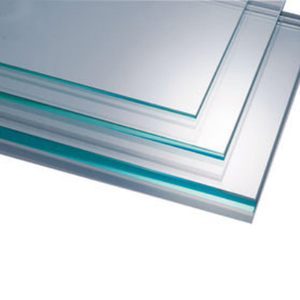
Urban noise pollution has elevated sound mitigation into a top-tier procurement requirement. Modern aluminium profile designs utilize multi-chambered internal geometries combined with dual-compression EPDM gasket channels. When paired with soundproof double or triple glazed tempered glass (such as 5mm+12Ar+5mm configurations), acoustic damping reaches ratings beyond STC 42 dB.
2. Ultra-Narrow Sightlines & Structural Hidden-Frame Systems
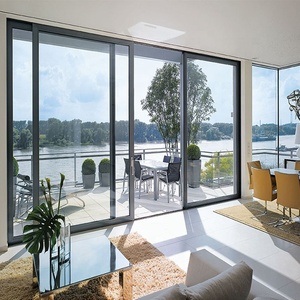
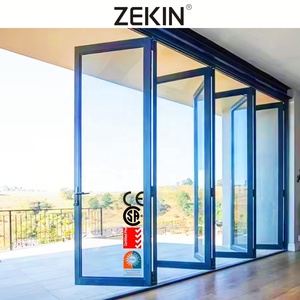
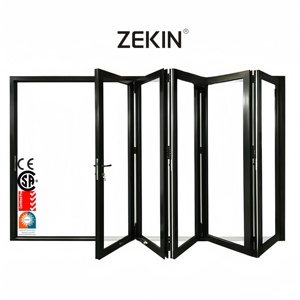
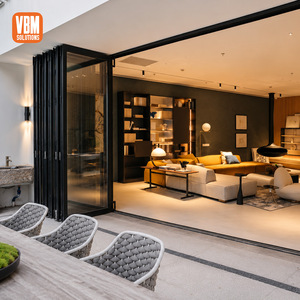
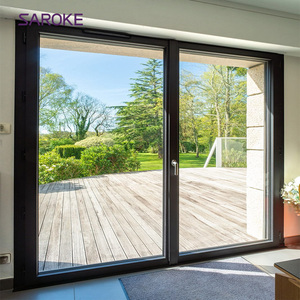
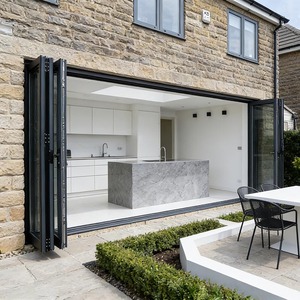
Architectural trends favor expansive glass expanses that blur the line between indoor and outdoor environments. Advanced extrusion technology enables ultra-slim interlock profiles (as narrow as 18mm) capable of supporting large glass panels weighing over 400 kg without structural deflection. High-end sliding doors and folding wall systems rely on high-precision CNC end-milling and hidden stainless-steel tandem rollers to ensure effortless sliding operation.
3. Green Metal & Low-Carbon Primary Aluminium Sourcing
With the implementation of Europe's Carbon Border Adjustment Mechanism (CBAM) and global ESG policies, leading Chinese manufacturers are switching from coal-powered smelting to hydro-powered primary aluminium. Recycled low-carbon aluminium (utilizing over 75% clean scrap) reduces embedded carbon footprints from ~16 kg CO2/kg Al down to under 4 kg CO2/kg Al, ensuring compliance with global zero-carbon construction goals.
Future Global Procurement Trends for B2B Aluminium Buyers
Procurement teams are shifting away from fragmented sourcing models toward fully integrated manufacturing partners who manage die casting, extrusion, anodizing, CNC machining, and hardware assembly under one roof. Key purchasing strategies include:
- Integrated OEM/ODM Single-Site Production: Partnering with facilities operating automated vertical extrusion presses (ranging from 800-ton to 7500-ton press capacity) to reduce lead times and prevent inter-factory transport damage.
- Pre-certified Compliance Packages: Requesting fully tested profile packages compliant with AS2047 (Australian standard for windows/doors), NFRC (National Fenestration Rating Council), CE marking, and Florida High-Velocity Hurricane Zone (HVHZ) impact requirements.
- Lifecycle Costing & Maintenance Guarantees: Evaluating powder coating durability under severe atmospheric conditions. Utilizing PVDF coatings or Qualicoat Class 2 marine-grade finishes guarantees color stability and corrosion resistance for 15 to 25 years.
Enterprise Strengths: Why Partner With Premier Chinese Extrusion Manufacturers
Our manufacturing facilities combine deep metallurgical expertise with advanced European hardware integration. By maintaining strict control over raw billet quality through final protective packaging, we deliver exceptional structural products tailored to global commercial, residential, and industrial projects:
Precision Extrusion & Die Capability
Operating over 25 automated extrusion lines with dies designed using Finite Element Analysis (FEA). We reliably extrude complex custom geometries, thin-wall structural profiles, and large-span architectural profiles while maintaining strict dimensional tolerances.
In-House CNC Fabrication & Machining
Equipped with 4-axis and 5-axis CNC machining centers capable of milling, drilling, tapping, corner-crimping, and notch-cutting profiles up to 6.5 meters long in a single setup, ensuring flawless alignment during final assembly.
Advanced Surface Finishing Infrastructure
Featuring vertical powder coating lines, wood-grain sublimation technology, micro-polishing, and electro-anodizing tanks. Surfaces pass rigorous 3,000-hour acetic acid salt spray (AASS) testing to ensure optimal corrosion protection.
Comprehensive Quality Assurance (QA/QC)
Every extrusion batch undergoes strict quality control checks, including web-thickness measurement, Spectro-chemical composition analysis, Barcol hardness testing, coating thickness gauges, and water-tightness wind-load testing.
Need Custom Extrusions or Project Quote?
Consult with our engineering team today for profile drawing analysis, thermal performance modeling, structural calculations, and direct factory pricing.
Get a Quote