“China Top Automatic Glass Doors How to Choose?” is not only a product question. It is a decision about safety, access, energy, and daily reliability.
The global automatic doors market continues to expand. Grand View Research projects a 7.3% compound annual growth rate from 2024 to 2030. However, market reports use different product definitions. Their figures should guide research, not replace site assessment. The World Health Organization reports that about 1.3 billion people experience significant disability worldwide. Therefore, a suitable entrance must accommodate wheelchairs, walking aids, children, and slower users. Ronald Mace, a pioneer of universal design, described its goal as “the design of products and environments to be usable by all people, to the greatest extent possible.” Automatic Glass Doors can support that goal, but only when sensors, opening speed, clear width, and emergency functions work together.
In China, selection should begin with the building’s entrance traffic. A busy hotel needs stronger cycles than a private office. Measure the opening width, surrounding temperature, wind exposure, and available power supply. Check the glass specification, operator capacity, sensor detection zone, anti-pinch protection, and manual-release performance. Ask for maintenance records and documented testing, not only attractive photographs. Looks can mislead. A narrow sensor field may leave a child or wheelchair user waiting beside the glass. Poor sealing can also increase drafts and operating costs. These details are easy to miss. I would also compare local service response times, spare-part availability, and installer experience. No checklist is perfect, and product brochures rarely show real winter mornings or crowded entrances. That is where careful judgment matters.
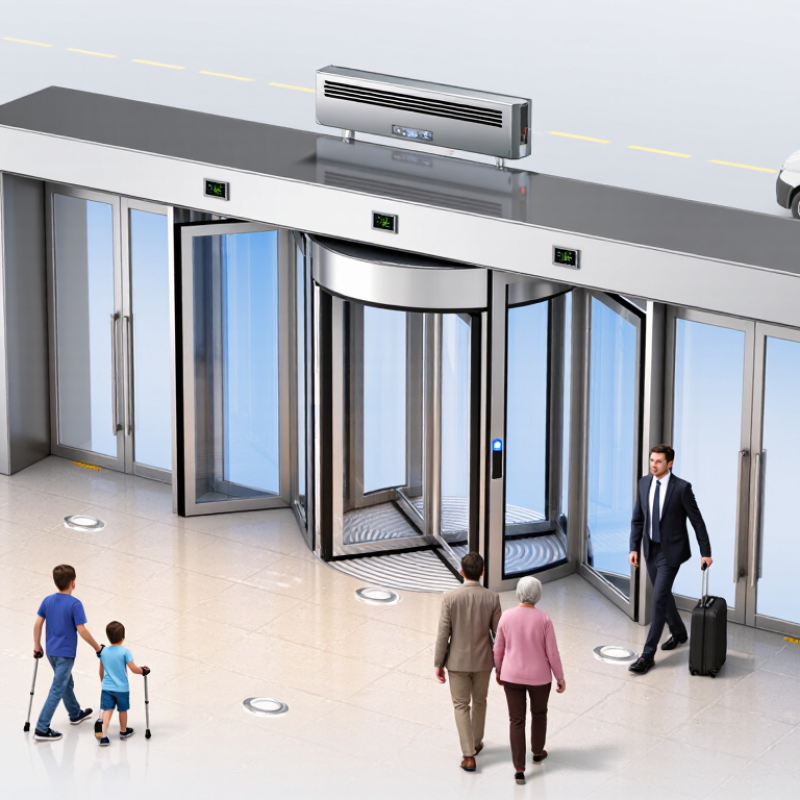
Choosing an automatic glass door begins with real movement, not attractive specifications. Count people during the busiest 15-minute period, then observe carts, luggage, wheelchairs, and two-way conflicts. A quiet showroom can become crowded at 8:30 a.m. Measure the peak flow in both directions. Door speed, hold-open time, and sensor coverage affect capacity as much as the nominal opening size. The 2021 International Building Code and NFPA 101 both connect egress planning with occupant load, so traffic assumptions should be checked by a qualified building professional.
Clear width must be measured, not guessed. The 2010 ADA Standards from the U.S. Access Board require at least 32 inches of clear opening, measured with the door open 90 degrees. Frames, seals, handles, and sliding panels can quietly reduce that space. I have seen drawings showing 36 inches, while the finished opening delivered less than 32. That is an avoidable error. Use a tape measure after installation.
For busy entrances, specify clear width above the minimum when the wall and budget allow it. A wider opening improves wheelchair passing and reduces shoulder contact during rush periods. Confirm approach space, threshold height, emergency operation, and sensor response with the installer. EN 16005 also emphasizes safe detection and powered-door operation. Standards guide the decision, but actual site observation remains essential. My own weak assumption would be treating average traffic as peak traffic; that can produce a door that looks efficient, yet feels slow and congested.
China Top Automatic Glass Doors: How to Choose?
Choosing automatic glass doors starts with space and traffic volume. Sliding doors suit wide entrances with steady pedestrian flow. They need side clearance for the panels, but their movement stays within the doorway zone. They work well in shopping centers, offices, and hospital reception areas. Keep the entrance clear. Even a small display stand can interrupt sensor performance.
Swing doors fit narrower entrances or spaces without enough wall length. They need a safe opening arc, so nearby furniture and queues require careful planning. They can handle moderate traffic, but repeated opening may slow busy entrances. Revolving doors manage continuous movement and help reduce indoor air loss. They need more floor space and careful user guidance. They may be less suitable for wheelchairs, carts, or emergency movement without an adjacent accessible door.
Measure the clear opening, waiting area, and daily peak traffic before choosing. Count people during the busiest fifteen minutes, not only the daily average. Add sensors, safety edges, and manual release options suited to the building. Qualified installers should check glass strength, operator capacity, drainage, and local accessibility and fire-safety requirements. In practice, the most attractive door is not always the best choice. A sliding door may look efficient, yet poor sensor placement can create delays. Test the entrance with real users. Small details matter.
China Top Automatic Glass Doors How to Choose?
Safety verification should begin with the standards, not the brochure. EN 16005 requires risk assessment, protective sensors, controlled closing, and safe escape behavior. ANSI/BHMA A156.10 evaluates activation, opening, closing, detection, and emergency operation. Ask for complete test records, not a simple compliance logo.
The 1.69-J limit is especially important. It controls the door’s kinetic energy during impact testing. A supplier should provide measured speed, panel mass, and test conditions. A heavier glass panel can exceed the limit, even when its motor appears smooth. On-site testing should include slow walking, a child-height approach, luggage, and a person stopping suddenly. Small details matter.
Industry market analyses published in 2024 forecast steady growth for automatic pedestrian doors, with global demand expanding at roughly 5% annually. That growth increases the need for documented safety controls. The European Commission’s Safety Gate reports also show thousands of product alerts each year across consumer categories, proving that paperwork alone cannot replace testing. I would still question any quotation that lists EN 16005 but omits sensor response data. Standards are useful, yet installation quality can weaken them.
China Top Automatic Glass Doors: How to Choose?
When comparing China suppliers, treat a one-million-cycle operator rating as test evidence, not a slogan. Ask for the test standard, door weight, opening speed, glass configuration, and operating temperature. A laboratory cycle test may use a balanced door, while your entrance may face wind, dust, and heavy daily traffic. Request dated reports, serial references, and clear testing conditions. Details matter.
In practical inspections, I check the motor sound, belt tension, sensor response, emergency release, and controller temperature. A smooth test door can still perform poorly after installation. Supplier engineering support is important, especially when the entrance has uneven floors or unusual traffic patterns. Confirm spare-part availability, installation training, warranty limits, and service response times. One million cycles sounds impressive. It is not a guarantee.
Tips: Compare identical specifications. Do not compare cycle numbers alone. Ask suppliers to test your estimated door weight and daily usage. Record the result in the contract. If a supplier avoids technical details, pause before ordering. A cheaper quotation may become expensive after repeated adjustments. Review real project photos, but remember that photos cannot prove durability.
| Anonymous Supplier Profile | Operator Type | Rated Door Weight | Maximum Opening Speed | 1-Million-Cycle Test Evidence | Power Failure Operation | Safety Sensors | Recommended Application | Verification Priority |
|---|---|---|---|---|---|---|---|---|
| Profile A | Brushless DC sliding operator | 2 × 120 kg | 0.7 m/s | Pass target: ≥1,000,000 cycles | Battery backup; fail-safe opening available | Presence and threshold sensors | Retail entrances and office buildings | Request independent cycle-test report |
| Profile B | Brushless DC sliding operator | 2 × 150 kg | 0.8 m/s | Pass target: ≥1,000,000 cycles | Battery backup; manual release included | Dual infrared safety beams | Hotels, hospitals, and high-traffic entrances | Confirm complete-load cycle testing |
| Profile C | Belt-driven sliding operator | 2 × 100 kg | 0.6 m/s | Supplier declaration; third-party proof required | Optional battery backup | Infrared sensor; safety photocell optional | Low-to-medium traffic commercial doors | Check belt, pulley, and replacement-part availability |
| Profile D | Heavy-duty brushless DC operator | 2 × 200 kg | 0.7 m/s | Pass target: ≥1,000,000 cycles | Battery backup and emergency manual opening | Presence, threshold, and side-panel protection | Airports, healthcare, and public facilities | Verify structural load rating and duty cycle |
| Profile E | Telescopic sliding operator | 2 × 100 kg | 0.6 m/s | Test scope and load not specified | Battery backup optional | Infrared presence sensor | Narrow openings and space-constrained projects | Confirm tested telescopic-panel configuration |
| Buyer checklist: A credible 1,000,000-cycle claim should identify the tested operator, door weight, panel configuration, opening speed, test conditions, and failure criteria. Also request installation instructions, spare-parts support, warranty terms, and evidence of compliance with the applicable local safety requirements. Cycle-life figures are meaningful only when the tested load and operating conditions match the proposed project. | ||||||||
Tempered glass is common, while laminated safety glass may improve protection after breakage.
Ask for documented glass testing and edge quality. Small chips can become serious weaknesses.
The sensor system deserves equal attention. Use presence sensors that detect people approaching and remaining in the doorway.
A narrow detection zone may close the panels too early. A wide zone can cause unnecessary opening. Controls should allow adjustable opening speed, hold-open time, and closing force.
These settings must match traffic flow, door weight, and the surrounding wind. A busy clinic needs different settings from a quiet office. That detail is often missed.
Backup power is not an optional luxury in many public buildings.
A properly sized battery can keep the door operating during short outages or move it to a safe position. Confirm its runtime, charging method, and replacement interval.
Test the system with the door fully loaded and the sensors active. Paper specifications can look convincing. Real conditions are less polite.
Installation should be checked by qualified technicians, with maintenance records kept for sensors, rollers, glass fittings, and emergency release functions.
One honest limitation remains: no automatic door stays reliable without regular inspection and careful adjustment.
No. It is test evidence, not a promise. Ask about the test standard, door weight, speed, glass setup, and temperature. A laboratory door may be balanced and clean. Your entrance may face dust, wind, and heavy traffic. One number is not enough.
Request dated test reports, serial references, and complete testing conditions. Ask whether the report matches your proposed door. Photos help, but they cannot prove durability. I might trust a polished report too quickly, so verify the details.
Compare identical specifications. Use the same glass thickness, door weight, speed, usage level, and operating conditions. Ask each supplier to test your estimated daily cycles. Record agreed results in the contract. A cheaper quote may become costly after repeated adjustments.
Safety glass between 8 and 12 millimeters is often practical. It balances strength, weight, and clear appearance. Tempered glass is common. Laminated safety glass may help retain pieces after breakage. Inspect edges carefully. Small chips can become serious weaknesses.
Choose sensors that detect approaching people and people remaining inside the doorway. Adjust the detection area for actual traffic. A narrow zone may close the panels too early. A wide zone may trigger unnecessary openings. Test the sensors with people, carts, and changing traffic.
Controls should adjust opening speed, hold-open time, and closing force. Settings must match door weight, traffic flow, and surrounding wind. A busy clinic needs different settings from a quiet office. Small adjustments matter.
It is often valuable in public buildings. Confirm battery runtime, charging method, and replacement interval. Test the battery with the door fully loaded and sensors active. The system should continue operating briefly or move the door safely. Paper specifications can look convincing.
Qualified technicians should inspect the motor sound, belt tension, sensor response, emergency release, and controller temperature. Check uneven floors and unusual traffic patterns. Keep records for rollers, glass fittings, sensors, and emergency functions. Regular inspection is essential. No automatic door stays reliable without adjustment.
Choosing the right Automatic Glass Doors begins with clearly defining the building’s needs. Assess expected traffic flow, available space, and the required clear opening, with at least 32 inches considered for accessible passage. Sliding doors are suitable for busy entrances with limited swing space, while swing doors may fit smaller or lower-traffic areas. Revolving doors can help manage high pedestrian volumes and improve indoor comfort when the layout allows.
Safety and reliability should guide the final decision. Confirm that the system is designed to meet relevant requirements such as EN 16005, ANSI A156.10, and the 1.69-J impact limit. When comparing China suppliers, review operator testing data, including ratings of around one million cycles, service support, and quality control. Specify 8–12 mm safety glass, presence sensors, protective controls, emergency release functions, and backup power to support dependable operation during power interruptions.