Choosing an aluminium garden gazebo is not just a matter of matching its frame to the patio. It should suit your climate, available space, and plans for using the garden. A compact 3-by-3-metre model may shelter a dining set, while a larger structure can make room for loungers and guests. Measure the site carefully, including clearance for doors, paths, and overhead branches.
Aluminium Garden Gazebos are valued for their relatively light frames and low-maintenance finish. Still, not every model is built alike. Check the frame dimensions, joint construction, roof material, drainage design, and the manufacturer’s guidance for anchoring. A powder-coated finish can help protect the surface, but it does not make every frame immune to scratches or harsh weather. Look closely at the details.
One practical rule of thumb from gazebo specialist Daniel Mercer is: “Choose for the weather you actually get, not the weather you hope for.” That is a useful test, though a single sentence cannot replace product specifications. In this guide, we will compare frame strength, roof options, size, installation needs, and everyday upkeep. You will also see which questions to ask before buying, from how replacement parts are sourced to whether the structure needs seasonal care. It is easy to focus on appearance. I would, too. But a beautiful gazebo that feels unstable in a gust is the wrong choice.
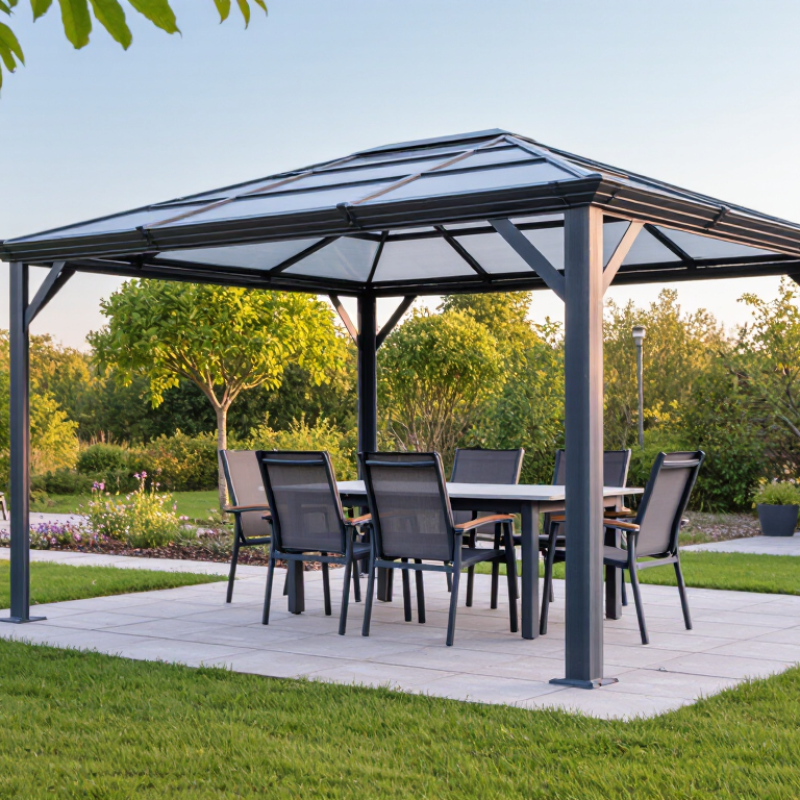
An aluminium garden gazebo has a lightweight frame made from hollow or reinforced sections, joined at the corners and roof supports. Aluminium does not rust like ordinary steel, but its surface finish still matters. A durable coating helps resist scratches, moisture, and fading; check corners and cut edges, where wear can appear first. Look closely at the joints. Loose-fitting connectors may allow the frame to wobble in gusts. Stability depends on the whole structure, not just thick-looking posts.
The roof determines shade, rain protection, and upkeep. Fixed panels offer steady cover, while adjustable louvers let you control sunlight and airflow. Either way, water needs a clear route away from the roof. Check for gutters, drainage openings, and places where leaves might collect. Small details matter. Also consider how the gazebo will be anchored to your patio or lawn; a freestanding frame is not automatically secure in windy conditions. I may be over-cautious here, but measuring the area twice is worthwhile: include door swings, nearby branches, and room to walk around the posts. Aluminium is generally easy to clean with mild soap and water, though coatings can still scratch. A quick inspection after storms can catch shifting fixings before they become a bigger problem.
How to Choose the Best Aluminium Garden Gazebo?
Assessing Your Space, Climate, and Intended Use
Measure the usable area, not just the lawn’s widest point. Include room for chairs, doors, and a clear walking route. A 3-by-3-metre gazebo may fit on paper but feel cramped beside a dining table. Check overhead branches and underground drainage, too. Small details matter.
Climate should shape the frame, roof, and anchoring plan. NOAA’s 1991–2020 U.S. Climate Normals use 30-year averages, helping you compare local temperatures and precipitation. For wind and snow exposure, consult site-specific hazard data from the American Society of Civil Engineers’ ASCE 7 Hazard Tool. Do not treat a light aluminium frame as storm-proof. A number on a map is not a guarantee; local exposure and installation matter.
Tips: Mark the footprint with string and test your furniture layout. For frequent outdoor dining, prioritize shade and ventilation; for a sheltered reading spot, consider rain coverage and afternoon sun. Check drainage after rain. I might still underestimate a gusty corner—revisit the site before choosing anchors.
Compare common footprints when assessing your available space and intended use.
Floor area is calculated from the listed dimensions: 3 × 3 m provides 9 m², 3 × 4 m provides 12 m², and 3 × 6 m provides 18 m². Allow extra room for access and furniture. In windy or snowy locations, check the gazebo’s rated conditions, anchoring requirements, and local weather guidance before choosing a size.
An aluminium garden gazebo should feel rigid before you compare decorative details. Check the frame’s wall thickness, corner joints, and cross-bracing. A light frame may be easier to assemble, but it can flex in gusts. Bolted joints are practical to inspect and tighten. Look closely at how the roof connects to the posts; small gaps can become rattles on windy days.
Roof type affects both shade and weather protection. Polycarbonate panels admit daylight and block direct rain, though they can make the space warmer in full sun. Fabric roofs offer softer shade but may need removal before severe weather. Solid aluminium roofs provide durable coverage, yet can feel dark underneath. Powder-coated finishes resist everyday corrosion, but no finish makes a structure immune to scratches or salty air. That detail is easy to overlook. In exposed locations, inspect coating edges and fasteners regularly.
Tips: Ask how the gazebo should be anchored for your ground type. Check whether water drains away from the roof, rather than pooling near a joint. After installation, retighten accessible bolts and clear leaves from gutters. I would not choose by roof appearance alone; wind exposure, drainage, and maintenance can matter more.
Start with the space you actually have, not the dimensions in a product photo. Measure the patio’s usable length and width, then leave room to walk around chairs and open nearby doors. A 3-by-3-metre frame may fit on paper but crowd a narrow path. Check overhead clearance too, especially under eaves, trees, or a low balcony. Small details matter.
Before ordering, confirm how the frame is assembled and anchored. Some kits need two people, a level surface, and several hours; allow more time if the instructions are unclear. Check whether the feet suit concrete, paving, or a timber deck, and use the specified fixings. Never assume a heavy frame is automatically secure in gusts. If your ground slopes, plan how water will drain instead of letting it collect around the posts.
Aluminium is generally low-maintenance, but it is not maintenance-free. Rinse dust and bird residue with mild soapy water, then dry the joints. Avoid abrasive pads that can mark the finish. Every few months, inspect bolts, connectors, and roof panels for looseness or wear. After strong winds, check again. I sometimes overlook small fasteners until a panel rattles; a simple inspection schedule helps. Keep drainage channels clear, and follow the assembly guide for care or replacement parts.
| Gazebo Size or Checkpoint | Typical Dimensions | Space and Use | Installation Needs | Maintenance Considerations |
|---|---|---|---|---|
| Compact square | About 3 × 3 m (9.8 × 9.8 ft); roughly 9 m² (97 ft²) of footprint | Suitable for a small patio, a bistro set, or a compact seating area. Allow extra room around the footprint for access and roof overhang. | Measure the clear area first. Check that the surface is level and that each post can be fixed to a suitable base. | Clear leaves from the roof and gutters, if fitted. Wash the frame with mild soapy water and rinse thoroughly. |
| Rectangular dining size | About 3 × 4 m (9.8 × 13.1 ft); roughly 12 m² (129 ft²) of footprint | Can accommodate a typical outdoor dining setup. Leave room for chairs to move back and for people to walk around the table. | Check the frame’s post positions against paving joints, drainage channels, and any underground services before drilling or anchoring. | Inspect joints, fixings, and any moving roof parts periodically. Remove standing water and debris after heavy rain. |
| Large square | About 4 × 4 m (13.1 × 13.1 ft); roughly 16 m² (172 ft²) of footprint | Offers space for a larger seating group or combined dining and lounging areas. Confirm that the garden has sufficient clearance on every side. | Plan for multiple people to assemble the frame. Larger structures may need more substantial anchoring; follow the supplied installation instructions. | Check fasteners and anchors at regular intervals, especially after storms. Clean the roof and frame using non-abrasive materials. |
| Overall height and clearance | Many garden models are approximately 2.3–3.0 m (7.5–9.8 ft) high; actual eaves and peak heights vary. | Check clearance beneath the eaves as well as at the roof peak, particularly near doors, windows, branches, and overhead structures. | Allow for roof parts and tools during assembly. Keep the installation area clear and check local rules or property restrictions where applicable. | Trim nearby branches to reduce abrasion and falling debris. Make sure roof panels or fabric are secured as directed. |
| Ground and anchoring | Measure the post-to-post footprint and compare it with the usable ground area. | A firm, level surface helps the frame sit squarely and allows doors or roof mechanisms to operate correctly. | Use anchors suited to the surface, such as appropriate masonry fixings for concrete. Do not assume paving slabs alone provide adequate anchorage. | Recheck anchors, bolts, and post bases for movement, corrosion, or wear. Tighten only as instructed by the manufacturer. |
| Roof, drainage, and weather exposure | Roof overhangs and gutter arrangements vary by design; check the full external dimensions. | Position the gazebo so roof runoff does not drain toward the house, paths, or neighboring property. | Consider wind exposure and the intended seasonal use. Follow stated wind and snow-load limits, and remove or secure components as instructed. | Keep gutters and drainage outlets clear. Do not allow snow or pooled water to remain on a roof unless its design and rating permit it. |
| Aluminium frame and finish | Compare frame dimensions, wall thickness, finish, and stated load ratings; these differ between designs. | A coated aluminium frame is generally suited to outdoor use, but finish quality and hardware materials affect long-term performance. | Check that all frame sections, connectors, and fixings are included before assembly. Avoid forcing misaligned parts together. | Use mild detergent and water. Avoid abrasive pads and harsh cleaners; rinse off salt or grime, and touch up finish damage as directed. |
Planning note: Dimensions are typical examples for comparison, not specifications for a particular product. Verify the exact footprint, eaves height, assembly requirements, anchoring method, and weather ratings before purchase.
Set a total budget before comparing aluminium garden gazebos. Include delivery, anchoring, assembly, and the accessories you may add later. A low purchase price can look attractive until the roof panels, side screens, or fixing kit are missing. Check the frame thickness and connection details, not just the word “aluminium.” A sturdy feel matters.
Look closely at the warranty terms. Does it cover the frame, finish, and roof separately? Check the duration, exclusions, and maintenance requirements. Some warranties may not cover damage from poor installation or neglected cleaning. Keep the instructions and purchase records. Small detail, big help. A longer warranty can be useful, but it does not automatically mean better construction. Read the conditions carefully.
Accessories should solve a real problem in your garden. Mesh screens can reduce insects, while curtains offer shade and privacy. A gutter kit may help direct rain away from a patio door. Price these items together with the gazebo, since compatible accessories can cost more than expected. Measure the space, including room for doors to open and chairs to move. I would rather choose a simpler model with a dependable frame than stretch the budget for every extra. Still, that trade-off is not perfect: a basic kit may need upgrades sooner. Compare the full setup, not just the advertised starting price.
Check corner joints, roof connections, and cross-bracing. Loose connectors can make the frame wobble in gusts. Look closely.
Measure space for chairs, door swings, and walking routes. Mark the footprint with string before buying. Paper measurements can mislead.
Adjustable louvers help control sun and airflow. Polycarbonate admits daylight, while solid panels provide steadier cover. Fabric may need removal before severe weather.
No. Stability depends on anchoring, joints, and local exposure. A light frame is not storm-proof. Check the instructions for your ground type.
Look for gutters and drainage openings. Clear leaves before they block water paths. Check for pooling near roof joints after rain.
Clean it with mild soap and water. Inspect bolts, coating edges, and fasteners after storms. Scratches can still happen.
Polycarbonate panels may make the space warmer in full sun. For outdoor dining, look for shade and airflow. I might underestimate afternoon heat.
Consider rain coverage and afternoon sun. Test the layout with a chair first. A quiet corner can still feel cramped.
Choosing the right Aluminium Garden Gazebos starts with understanding how their frames, roofs, and overall construction affect comfort and durability. Consider the size and layout of your outdoor space, your local climate, and how you plan to use the gazebo, whether for dining, relaxing, or entertaining. A suitable design should provide enough room for its intended purpose while fitting naturally into your garden.
Compare frame strength, roof style, and resistance to rain, wind, and sun exposure. Before buying, check the gazebo’s dimensions, installation requirements, and the care needed to keep it in good condition. Finally, balance your budget with the materials, warranty, and useful accessories included. Looking at these factors together can help you choose a practical gazebo that suits your space and offers lasting value.