Choosing Aluminium Kitchen Cabinets in 2026 requires more than admiring a sleek silver finish. It demands evidence, practical testing, and honest comparison. Grand View Research valued the global kitchen cabinets market at approximately USD 94.4 billion in 2023, with continued growth expected through 2030. Aluminium remains a smaller segment, but demand is rising because homeowners want moisture resistance, lighter structures, and longer service life.
Materials matter.
A reliable cabinet should identify its alloy, coating process, panel thickness, and hardware quality. Many manufacturers use 6063 aluminium profiles, powder-coated surfaces, and stainless-steel hinges. These details affect cabinet stability, cleaning performance, and corrosion resistance. In coastal homes, salt exposure can quickly reveal weak finishes. Look closely at joints, drawer runners, edge seals, and the underside of sink units. Those areas often fail first.
Matt Meenan, a former Aluminum Association spokesperson, has stated, “Aluminum is infinitely recyclable.” The International Aluminium Institute also reports that about 75% of all aluminium ever produced remains in use today. These figures support aluminium’s circularity advantage, but recycling alone does not guarantee responsible manufacturing. Energy sources, transport distance, coating chemicals, and product lifespan still matter. That part deserves more attention.
Real kitchen experience also exposes limitations. Aluminium can transmit sound, feel cold, and show scratches more clearly than textured laminate. Some doors may require adjustment after repeated use. Therefore, this guide will examine durability, cost, design flexibility, maintenance, environmental claims, and installation quality. The cheapest quotation may not be the best value. Nor is the most polished sample always the strongest choice.
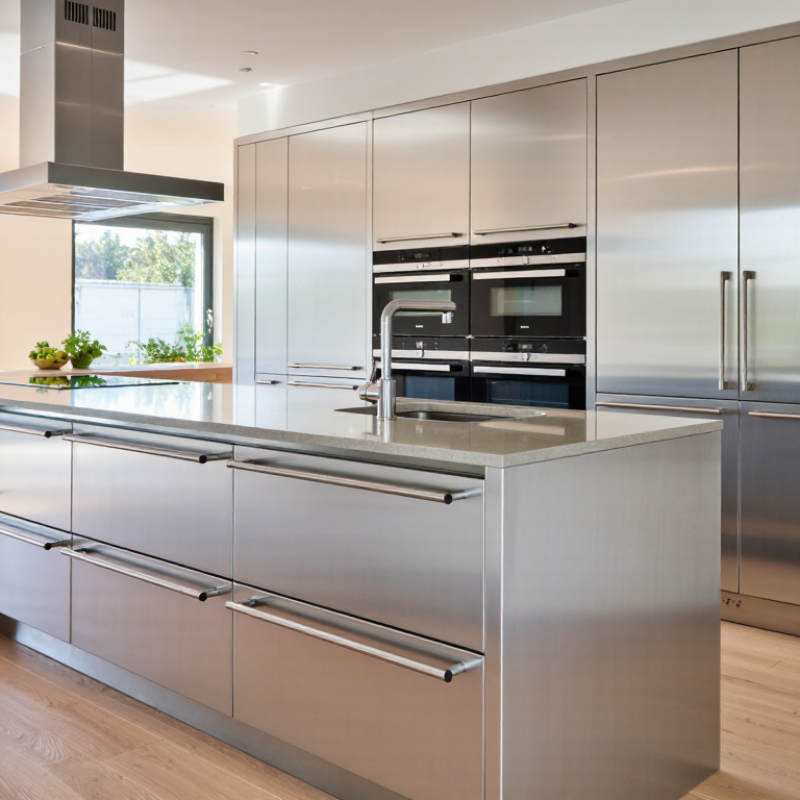
How to Choose Aluminium Kitchen Cabinets in 2026?
Understanding Aluminium Cabinet Types and Their Best Uses
Aluminium kitchen cabinets now suit more than modern interiors. Their resistance to moisture makes them practical near sinks, dishwashers, and outdoor kitchens. On site, installers often recommend powder-coated panels for busy homes because they clean easily and resist everyday stains. However, coating quality matters. A thin finish may show scratches around handles and drawer edges.
Base cabinets support worktops and store heavy cookware. Choose reinforced frames when installing stone surfaces or wide drawers. Wall cabinets keep plates and glasses within reach, but lighter doors reduce stress on the mounting system. Tall pantry units use vertical space efficiently. They work well beside refrigerators, although poor internal lighting can make deep shelves frustrating. Island cabinets provide storage from both sides and may conceal bins, plumbing, or seating supports.
Aluminium cabinet doors usually come as framed, frameless, slatted, or glass-fronted designs. Framed doors offer a structured appearance and can hide small alignment errors. Frameless doors create cleaner lines and slightly more interior access. Slatted panels improve ventilation in humid areas, while glass doors help locate frequently used items. Measure hinge clearance carefully. Small mistakes become expensive later.
I would not choose aluminium for every kitchen. Some surfaces feel colder and can create more noise when doors close. Soft-close hinges, rubber buffers, and textured finishes improve daily comfort. Check panel thickness, corner joints, warranty terms, and repair access before ordering. A cabinet that looks perfect in a showroom may perform poorly beside heat, steam, and constant movement.
Compare common aluminium cabinet constructions by structure, suitable applications, and practical trade-offs. Actual durability and performance depend on material thickness, hardware, finish quality, installation, and maintenance.
| Cabinet Type | Typical Construction | Best Uses | Key Advantages | Points to Consider | Relative Cost |
|---|---|---|---|---|---|
| Aluminium Frame with Glass Infill | Aluminium profiles form the door frame, with glass fitted inside. The cabinet box may be aluminium or another suitable material. | Display cabinets, upper cabinets, and areas where visibility or a lighter visual effect is desired. | Glass makes contents easy to see and clean; frame finishes and glass options allow varied designs. | Glass shows fingerprints and contents, and can break if struck. Choose safety glass where appropriate and confirm the glass is securely retained. | Moderate to high, depending on glass type, frame finish, and hardware. |
| Aluminium Frame with Solid Panel Infill | A metal frame supports an opaque panel, which may be aluminium sheet or another compatible panel material. | Everyday kitchens needing a clean, solid-front appearance; suitable for both base and wall cabinets when correctly specified. | Offers a more concealed look than glass-front doors and can be easier to coordinate across a kitchen. | Panel material and edge details affect resistance to dents, moisture, heat, and cleaning products. Ask for the exact panel specification. | Moderate; varies with panel material and finish. |
| All-Aluminium Cabinet System | Cabinet sides, shelves, doors, and supporting components are primarily made from aluminium parts or formed panels. | Utility areas, humid locations, and projects seeking a cabinet system with minimal wood-based components. | Aluminium does not rust like ordinary iron or steel, and it is not susceptible to wood rot. It is also relatively lightweight. | Aluminium can dent or scratch, and joints, coatings, and hardware still require appropriate care. Performance depends on design and fabrication quality. | Moderate to high, depending on construction and finish. |
| Aluminium Honeycomb-Panel Cabinets | Panels use thin aluminium skins bonded to a lightweight honeycomb core, with the core providing internal support. | Large cabinet doors or panels where reduced weight and panel stiffness are useful. | Honeycomb construction can provide a good stiffness-to-weight balance compared with a similarly sized solid sheet. | Edges and fixing points need suitable detailing; repair and hardware installation may require purpose-designed components. | Moderate to high, depending on panel specification and fabrication. |
| Modular Aluminium Cabinet System | Standardized aluminium frames, panels, shelves, and connectors are assembled into configurable cabinet units. | Renovations, compact kitchens, and layouts where replaceable or reconfigurable modules are helpful. | Standard modules can simplify planning and replacement, and individual units may be easier to install than fully custom cabinetry. | Module sizes may limit custom layouts. Check dimensions, load ratings, wall-fixing requirements, and compatibility between components. | Low to high, depending on customization, accessories, and finish. |
They resist moisture near sinks, dishwashers, and outdoor kitchens. Poor sealing can still trap water behind panels.
Base cabinets provide strong storage below the worktop. Reinforced frames suit stone surfaces and wide drawers.
Tall units use vertical space beside refrigerators. Add internal lighting, or deep shelves may become frustrating.
Framed doors hide small alignment errors. Frameless doors offer cleaner lines. Slatted panels improve airflow, while glass doors reveal stored items.
Check panel thickness, corner joints, hinge clearance, load ratings, and repair access. Small measuring mistakes become expensive.
Yes. Some surfaces feel cold, and doors may sound noisy. Soft-close hinges, rubber buffers, and textured finishes help.
Request alloy details, coating specifications, joint samples, written load ratings, references, and warranty coverage. Attractive showroom lighting proves very little.
Request a site survey covering wall levels, floor slopes, pipes, ventilation, sockets, appliance gaps, and service openings. Leave time for adjustments.
Not necessarily. Indoor cabinets may need less protection than sun-exposed areas. Paying more is not automatically better.
Uneven walls, delivery delays, missing sockets, and damaged panels can disrupt installation. I would reserve money and time. Things rarely align perfectly.
Choosing Aluminium Kitchen Cabinets in 2026 starts with understanding the available cabinet types and matching them to your kitchen’s layout, cooking habits, and storage requirements. Homeowners should take accurate measurements, consider workflow and accessibility, and decide whether they need wall, base, tall, modular, or custom units. Comparing frame quality, panel construction, surface finishes, and protective coatings is also essential, as these factors affect durability, appearance, and resistance to moisture, heat, and daily wear.
A reliable selection should include strong hinges, smooth drawer systems, practical handles, and hardware that can be repaired or replaced easily. Buyers should also evaluate cleaning needs, recyclability, long-term sustainability, and the total cost rather than focusing only on the initial price. Finally, choosing an experienced supplier and confirming product specifications, delivery details, warranties, and professional installation procedures can help prevent measurement errors and ensure a secure, attractive, and long-lasting Aluminium Kitchen Cabinets solution.