0%

Choosing the right Glass Staircase Railings manufacturer in 2026 requires more than comparing attractive project photos. This guide examines manufacturers through practical experience, product expertise, verified performance, and dependable customer support. It considers tempered or laminated glass options, stainless steel and aluminum fittings, structural design, finish quality, and installation guidance. Details matter.

A strong manufacturer should explain how its systems handle load requirements, edge protection, moisture exposure, and daily household wear. Clear technical documents, testing records, project references, and transparent warranty terms can reveal more than polished marketing language. We also look at production capability, customization, lead times, quality control, and communication after delivery. Reliable companies usually answer difficult questions directly.

No supplier is perfect. A beautiful catalog cannot replace accurate measurements or skilled installation. Some manufacturers may offer excellent glass but limited regional support. Others may provide fast service yet fewer design choices. These weaknesses deserve attention. The manufacturers discussed in this guide are evaluated for overall value, not simply reputation or price. Their suitability may differ between luxury residences, hotels, offices, and renovation projects. Readers should still confirm local building requirements and request current documentation before ordering. This approach aims to create a practical, evidence-based starting point for comparing leading manufacturers in 2026, while recognizing that real project conditions can change the final decision.
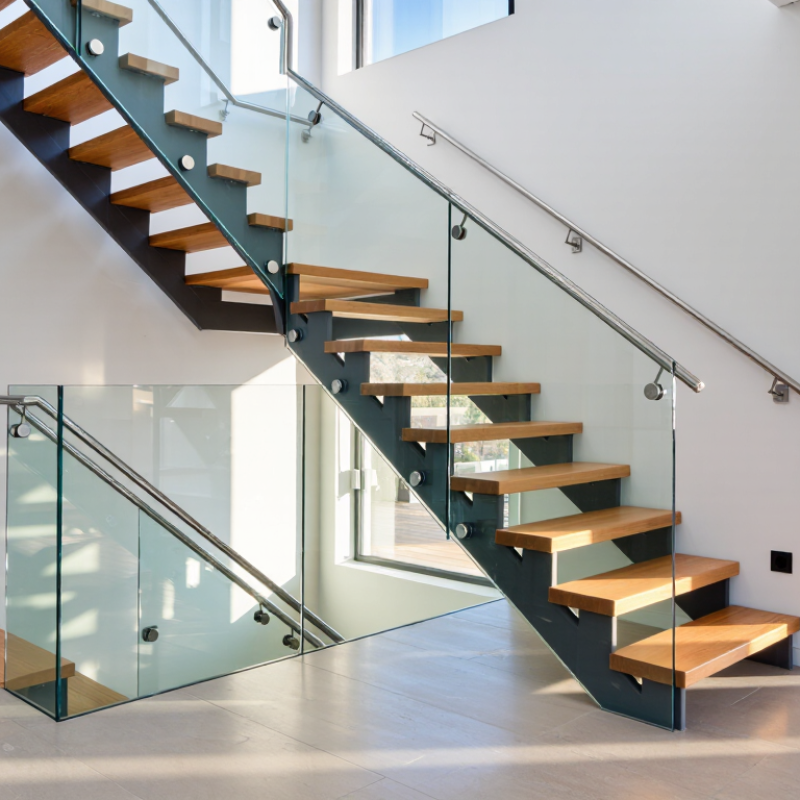
2026 Top Glass Staircase Railings Manufacturers?

What Defines a Leading Glass Staircase Railing Manufacturer in 2026

What Defines a Leading Glass Staircase Railing Manufacturer in 2026

A leading glass staircase railing manufacturer combines tested engineering with practical installation experience. The best suppliers understand load paths, stair angles, glass deflection, and handrail comfort. They use properly specified tempered or laminated safety glass. Their hardware should resist corrosion, movement, and repeated daily impact. Clear technical drawings matter as much as attractive product images. Reliable manufacturers also provide measured tolerances, maintenance guidance, installation training, and traceable quality records. These details reveal professional discipline.

Tips: Ask for test evidence, glass specifications, hardware grades, and installation instructions before ordering. Check how the manufacturer handles uneven walls, narrow landings, and curved staircases. Request project samples with close-up photographs. A serious technical team should explain limitations without avoiding difficult questions.

Customization is another important measure in 2026. Leading manufacturers can coordinate glass thickness, edge finishes, clamps, channels, posts, and handrails without creating compatibility problems. They should communicate realistic production times and explain replacement procedures. Responsive service is valuable when a panel arrives damaged or site dimensions change. Still, no manufacturer gets every detail perfect. Even experienced teams may misread a renovation site or underestimate delivery risks. The difference lies in how openly they correct mistakes. Strong manufacturers document changes, inspect finished work, and improve their process after each project. Reliability is not only polished design. It is evidence, communication, and responsible follow-through.

Top Glass Staircase Railing Manufacturers and Their Product Strengths

Top Glass Staircase Railings Manufacturers?

The strongest glass staircase railing manufacturers compete through engineering, not appearance alone. Grand View Research valued the global architectural glass market at about USD 78.8 billion in 2023. Its forecast also indicates steady growth through 2030. This expansion increases demand for safer, thinner, and more adaptable stair systems.

High-performing manufacturers usually offer laminated or toughened glass, accurately machined edges, and corrosion-resistant stainless-steel fittings. Laminated glass can remain bonded after breakage, reducing dangerous falling fragments. Strong suppliers also provide load calculations, hole-position drawings, and installation tolerances before production. Small errors matter. A few millimeters can create visible gaps along a long staircase.

Product testing separates reliable manufacturers from attractive catalogues. ASTM E1300 supports structural glass design, while EN 12600 evaluates impact behavior through pendulum testing. Buyers should request test reports, glass thickness details, and evidence of batch traceability. The best suppliers often combine digital measurement with experienced site checks. That practical step prevents a beautiful railing from fitting poorly.

Customization is another important strength. Manufacturers may produce curved panels, low-iron glass, concealed channels, or handrails for compact staircases. However, more customization can increase replacement difficulty and installation time. Some sales materials still promise “seamless” results without explaining maintenance access. That deserves caution. In real projects, fingerprints, anchor alignment, and cleaning access can affect daily satisfaction more than showroom lighting.

2026 Top Glass Staircase Railings Manufacturers?

Top Glass Staircase Railing Manufacturers and Their Product Strengths

The chart compares common glass configurations used for staircase railings by their typical nominal thickness ranges. Laminated and tempered-laminated systems provide stronger safety retention because the interlayer helps hold glass fragments together after breakage, while low-iron glass is selected mainly for improved visual clarity.

Reference values represent commonly specified architectural glazing ranges. Final glass thickness and construction depend on span, fixing method, guard-load requirements, local building codes, and engineering approval.

Glass Types, Railing Systems, and Customization Options

Choosing among 2026 glass staircase railing manufacturers requires more than comparing polished photographs. Glass type affects safety, clarity, and maintenance. Tempered glass offers strong impact resistance, while laminated glass keeps fragments attached after breakage. Low-iron glass provides a cleaner, bluish-free view.

According to Grand View Research, the global architectural glass market was valued at over USD 70 billion in 2023 and is expected to grow steadily through 2030. That growth supports wider customization.

Buyers can specify frameless channel systems, point-fixed panels, standoff fittings, or post-and-rail designs. Each system changes drilling needs, installation time, and visual weight. Thin handrails look elegant. They may feel less comfortable for children or older users.

Customization should follow measured site conditions, not only interior style. Options include clear, frosted, tinted, curved, acid-etched, and digitally patterned glass. Stainless steel, powder-coated aluminum, and timber handrails create different tactile experiences. The U.S. Glass Association emphasizes that edge quality, glazing tolerance, and correct handling strongly affect long-term performance. Small errors matter.

I would request load calculations, glass certifications, hardware grades, and installation drawings before selecting a supplier. One overlooked detail is cleaning access around channels. Dust collects there quickly. Another is stair movement, which can expose weak tolerances. A reliable manufacturer should explain these limitations plainly, even when the design looks less impressive.

Safety Standards, Certifications, and Installation Requirements

Choosing among the top glass staircase railing manufacturers in 2026 requires more than comparing appearance or price. Safety documentation should come first. Reputable manufacturers provide glass specifications, load-test reports, and installation instructions. Ask whether panels are tempered, laminated, or both, depending on local code requirements and the railing design.

Certifications need careful checking. A valid certificate should identify the tested product, standard, laboratory, and issue date. Quality management certification can support reliable production, but it does not automatically prove stair-guard compliance. A certificate alone is not enough. Verify guard height, opening limits, handrail dimensions, impact resistance, and structural loads with the authority having jurisdiction. Requirements vary between countries, states, and municipalities.

Installation is equally important. The supporting floor or stair structure must accept the specified base shoes, posts, or point-fixed hardware. Installers should check substrate strength before drilling. Glass edges need protection during transport and fitting. Hardware must be tightened according to documented torque values, not guesswork. Site measurements should include stair pitch, landing levels, and finished floor thickness. Small errors become visible quickly.

Experience matters here. I have seen attractive systems fail during planning because the handrail was treated as decoration. That mistake is avoidable. Require shop drawings, product traceability, maintenance guidance, and a final inspection record. Independent review may be worthwhile for complex or heavily used staircases. Even experienced teams can miss a detail.

How to Compare Manufacturers, Pricing, Warranties, and Support

2026 Top Glass Staircase Railings Manufacturers?

Comparing glass staircase railing manufacturers requires more than checking online prices. Ask how each supplier handles measurements, engineering, fabrication, and installation coordination. Request drawings showing glass thickness, panel dimensions, fixing points, and required load performance. A professional manufacturer should explain whether the system uses tempered or laminated glass, and why that choice suits your staircase.

Pricing often changes after the site survey. Compare complete quotes, not attractive starting figures. Check whether the price includes brackets, channels, handrails, delivery, installation, and removal of packaging. Ask about custom angles and drilling fees. A low quote may exclude critical hardware. That mistake becomes expensive.

Review the warranty line by line. Confirm coverage for glass defects, hardware corrosion, finish changes, and installation problems. Check the warranty period, exclusions, claim process, and response times. Reliable support includes a named contact, replacement-part availability, installation guidance, and written maintenance instructions. Ask how damaged panels are secured during replacement. Also request realistic lead times, not optimistic promises.

Details matter. Very much. A strong manufacturer will provide test records, clear tolerances, and traceable product information. They should also explain cleaning methods for fingerprints, salt residue, and construction dust. I have learned that polished samples can hide difficult site conditions. Uneven floors, narrow access routes, and late design changes deserve direct questions before signing. Compare communication quality as carefully as price. It often predicts the installation experience.

2026 Top Glass Staircase Railings Manufacturers? - How to Compare Manufacturers, Pricing, Warranties, and Support

The figures below are practical 2026 market benchmarks for comparing glass staircase railing suppliers. Actual prices vary according to stair geometry, glass specification, finish, installation location, freight, and local building-code requirements.

Comparison Dimension Recommended Benchmark Typical 2026 Market Range What to Verify With the Manufacturer Evaluation Weight
Glass safety specification Use safety glazing suitable for stair applications, preferably laminated or laminated-tempered glass where required by code. Common thicknesses: 10–13.52 mm; heavier systems may use 16.76 mm or more. Glass type, thickness, interlayer, edge treatment, test reports, and compliance with applicable local standards. Very High
Tempered-glass quality control Each panel should be permanently traceable to production and inspection records. Heat-soak testing may be available as an additional risk-reduction option, especially for large panels. Heat-treatment records, dimensional inspection, visual-quality grading, and packaging inspection procedures. High
Railing system design Select a tested system consisting of glass, base shoe, clamps, posts, handrail, fasteners, and anchors. Frameless, semi-frameless, and post-supported configurations are widely available. System load data, allowable spans, deflection limits, anchor requirements, and engineering calculations. Very High
Material and corrosion resistance Use stainless steel, aluminum, or another metal grade appropriate for the interior or exterior environment. Common options include stainless steel grades 304 and 316; 316 is generally preferred for coastal or chloride-rich conditions. Material certificates, surface finish, coating process, salt-spray data where relevant, and compatibility between metals. High
Typical material cost Compare like-for-like specifications rather than comparing only the lowest quoted total. Approximately US$150–$600 per linear foot for materials, depending on glass, hardware, finish, and system complexity. Whether the quote includes glass, hardware, engineering, crating, freight, taxes, and replacement parts. High
Installed project cost Request a site-specific, itemized quotation based on verified field dimensions. Approximately US$250–$1,000+ per linear foot installed; complex stair geometry may cost more. Survey fees, demolition, substrate repair, installation labor, permits, delivery, lift access, and final inspection. High
Measurement and site survey The supplier should verify stair pitch, landings, finished-floor levels, openings, and anchor locations before fabrication. Digital laser measurement or detailed field templates are preferred for irregular stairs. Who is responsible for measurement errors, approval drawings, and final dimensional sign-off. Very High
Lead time Lead time should begin after approved drawings, deposit, and verified measurements. Typical custom fabrication: 4–10 weeks; shipping and installation add additional time. Production schedule, drawing approval deadline, shipping method, customs responsibility, and delay procedures. Medium
Warranty coverage The warranty should separately identify glass, hardware, finishes, installation, and labor coverage. Common commercial ranges: 1–5 years for installation and hardware; longer limited coverage may apply to selected finishes or components. Exclusions for impact, incorrect cleaning, building movement, corrosion, unauthorized modification, and normal wear. High
Replacement and after-sales support A reliable supplier should retain project drawings, glass specifications, finish details, and hardware records. Replacement glass and custom hardware may require several weeks because panels are project-specific. Response-time policy, spare-part availability, breakage procedure, technical documentation, and service territory. High
Building-code support The final design must be reviewed against the requirements applicable at the project location. Requirements commonly address guard height, opening limitations, handrails, loads, safety glazing, and stair geometry. Code references, stamped calculations where required, test evidence, permit support, and responsibility for approvals. Very High
Installation capability Use trained installers who understand glass handling, anchor torque, leveling, and sealant compatibility. Installation may be performed by the supplier, a certified partner, or an independent contractor. Installer qualifications, insurance, project references, safety procedures, punch-list process, and handover documents. High
Customization capability The supplier should support curved, angled, sloped, landing, and mixed-material configurations when required. Custom shapes, drilled holes, notches, polished edges, and special finishes usually increase cost and lead time. Maximum panel size, minimum radius, allowable tolerances, drawing revision process, and remake policy. Medium
Packaging and logistics Glass should be transported upright in protective, impact-resistant packaging with clear panel identification. Freight cost depends on panel size, shipment distance, crating, insurance, and delivery access. Crate design, inspection-at-delivery requirements, concealed-damage policy, insurance, and unloading equipment. Medium
Sustainability and maintenance Prefer durable, repairable systems with low-maintenance finishes and recyclable metal components. Routine care generally includes non-abrasive glass cleaning and periodic inspection of fittings and fasteners. Cleaning instructions, approved chemicals, finish-care guidance, spare-part compatibility, and recycling information. Medium
Important: Pricing and lead-time figures are indicative planning ranges, not quotations. Confirm the final design, structural loads, safety-glazing requirements, guard and handrail dimensions, permits, and installation responsibilities with the qualified professional responsible for the project location.

FAQS

Which glass types are suitable for staircase railings?

Tempered glass offers strong impact resistance. Laminated glass keeps broken fragments attached. Low-iron glass provides a clearer, less bluish view.

What railing systems can manufacturers provide?

Common options include frameless channels, point-fixed panels, standoff fittings, and post-and-rail designs. Each system affects drilling, installation time, and visual weight.

How should I choose glass customization options?

Select clear, frosted, tinted, curved, acid-etched, or digitally patterned glass. Base the decision on measured site conditions, not appearance alone.

Which handrail materials are available?

Stainless steel feels modern and durable. Powder-coated aluminum offers varied finishes. Timber feels warmer in the hand. Thin handrails may feel uncomfortable for some users.

What documents should I request before choosing a manufacturer?

Request load calculations, glass certifications, hardware grades, and installation drawings. Drawings should show thickness, panel sizes, fixing points, and performance requirements.

What should a complete quotation include?

Compare complete quotes, not low starting prices. Check brackets, channels, handrails, delivery, installation, packaging removal, custom angles, and drilling fees.

What warranty details deserve attention?

Review coverage for glass defects, corrosion, finish changes, and installation problems. Confirm exclusions, claim procedures, response times, and replacement-part availability.

How can I reduce installation and maintenance problems?

Ask about uneven floors, narrow access routes, stair movement, and late design changes. Check cleaning access around channels. Dust collects there quickly.

What support should a reliable manufacturer provide?

Look for a named contact, realistic lead times, test records, clear tolerances, and written maintenance instructions. Polished samples can hide difficult site conditions.

Conclusion

Choosing the right Glass Staircase Railings manufacturer in 2026 requires more than comparing appearance and price. Leading manufacturers are defined by their engineering expertise, material quality, production consistency, design flexibility, and ability to deliver reliable project support. This overview explains how different glass types, railing systems, hardware finishes, and custom dimensions can be combined to meet residential, commercial, and architectural requirements while maintaining a clean, modern appearance.

The article also highlights the importance of safety standards, certified materials, accurate measurements, professional installation, and compliance with applicable building requirements. To make an informed decision, buyers should compare product specifications, customization capabilities, lead times, warranty coverage, pricing transparency, replacement support, and after-sales service. By evaluating these factors together, customers can select a manufacturer that offers durable, safe, visually appealing, and well-supported Glass Staircase Railings for long-term performance.


Nathan

Nathan

Nathan is a dedicated marketing professional with extensive knowledge of the company’s products, services, and customer-focused approach. Through a combination of market research, strategic planning, and clear communication, he helps present complex product information in a practical and accessible......